 Into The Music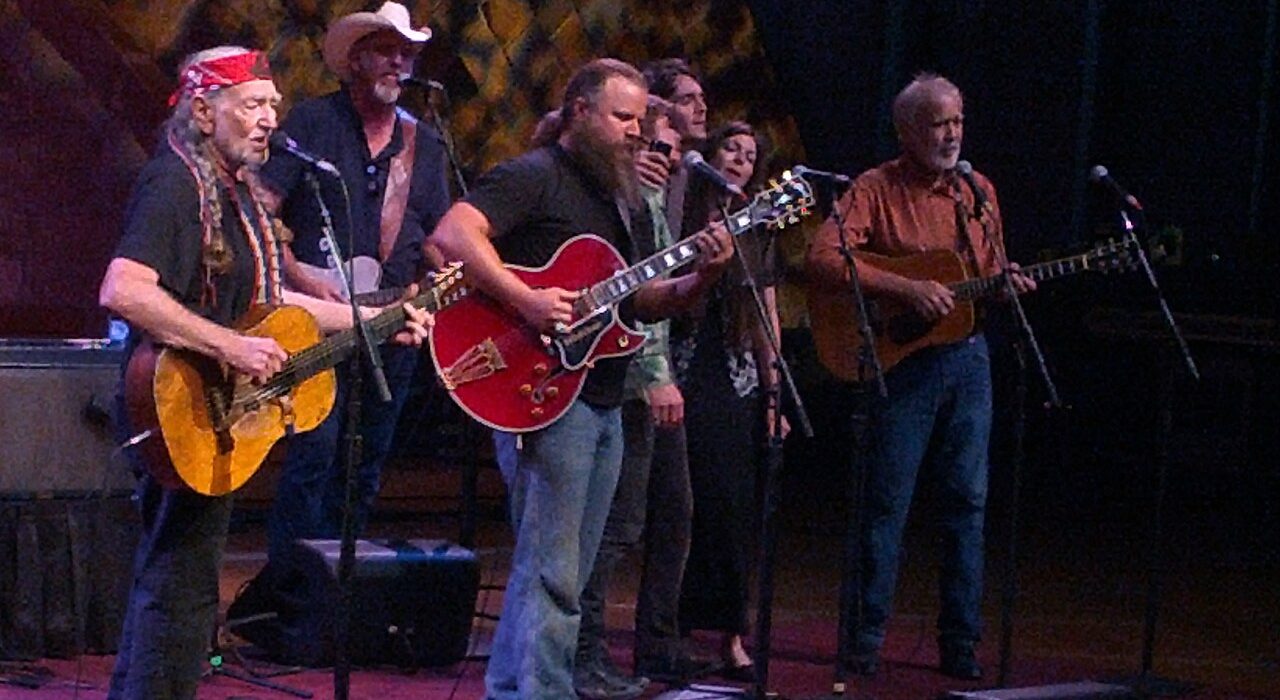
Willie Nelson just announced the 2026 Outlaw Music Festival Tour, with Wilco, Sheryl Crow, and The Avett Brothers joining him on the road. This is a good moment to ask what folk music actually is in 2026, because the answer is less obvious than it used to be.
Folk music in America started as a label for songs that belonged to communities rather than to individual composers. Ballads, work songs, shape-note hymns, the music that traveled without copyright because it was simply what people sang. It was archival before anyone had the word “archival.” The first scholars to document it in the early 20th century were trying to preserve something they feared was disappearing. They were right about it disappearing, but wrong about what would replace it.
What replaced it was a genre that borrowed the name and some of the aesthetic but operated completely differently. The folk revival of the 1950s and 1960s gave America artists like Pete Seeger, Joan Baez, and early Bob Dylan, people who used acoustic instruments and plain-spoken language to make explicitly political music. The music had the texture of tradition but the intent of activism. It was folk music as posture, and that is not a criticism. The posture did real work.
Dylan going electric in 1965 is the moment usually cited as the rupture in this story, but it was less a rupture than a clarification. Folk music was always absorbing other influences. What happened in the 1960s was that the category became too important commercially and culturally to stay small. It expanded, folded in country and blues and eventually rock, and the boundaries dissolved.
What we have now is something genuinely harder to define. Willie Nelson is folk by some definitions: acoustic at his core, narrative-driven, rooted in American vernacular traditions. Wilco are folk by other definitions: guitar-based, lyrics-first, indebted to the Americana tradition that is itself a kind of folk revival. The Avett Brothers are folk in the way that brothers with banjos who play loud and fast and cry on stage are folk, which is to say folk as emotional honesty rather than acoustic purity.
Sheryl Crow sitting in that tour lineup is the most interesting data point. She is rock, she is pop, she is country-adjacent, she is none of those things exclusively. Her songs have the structure and the plainspokenness of folk music even when the production leans toward something else. Which is exactly the point. Folk music in 2026 is not a sonic category so much as an attitude toward what songs are for.
Songs are for telling the truth about ordinary life. Songs are for sitting around and singing when the moment calls for it. Songs are for passing down, not just for streaming. That set of values is what folk music has always protected, even when the sounds changed around it. The Outlaw Music Festival exists in that tradition, which is older and stranger and more durable than any genre tag.
Willie Nelson is 92 years old and still touring. That is a folk music story if there ever was one.
Willie Nelson at 92 still dragging Wilco and Sheryl Crow on the road , the Americans have their own kind of chanson, and somehow it keeps surviving everything.
What I love about this piece is how it gets at the WHY of folk music , it’s not just acoustic guitars and harmonies, it’s a function. Songs that carry information, grief, community memory across generations before recording technology existed. Willie Nelson understood this intuitively. The Outlaw movement wasn’t rebellion for its own sake; it was folk’s DNA reasserting itself against Nashville’s over-production. If you want to explain folk music to someone who thinks it’s boring, ask them what songs were FOR before radio. That’s folk.
You’ve touched on something that connects folk music to the oldest literary traditions , the idea that song is never merely entertainment but rather a form of structured memory, what Walter Ong would call ‘secondary orality.’ What Willie Nelson and the Avett Brothers share, despite their obvious differences, is a fidelity to that function. The songs carry weight because they’re constructed to carry weight, not to be disposable. Whether Wilco’s more ironic approach belongs in that lineage is the more interesting question the article doesn’t quite get to.
OK I’m mostly a dancehall girl but The Avett Brothers on this bill?? They bring ENERGY live, the crowd gets completely swept up , folk or not, when the rhythm is right the rhythm is RIGHT and those boys know how to build to something!! Willie and this lineup is gonna be a whole spiritual experience on that road.
Just discovered the Avett Brothers last year through Spotify and I’m still not over it , how did nobody tell me?? And now I’m reading that Willie Nelson is bringing them on a whole tour at 92 years old?? I don’t know much about folk history but I know that lineup makes me want to road-trip somewhere. This article is making me want to go deeper into all of this.
What the article identifies as folk’s ‘functional’ core maps interestingly onto how the genre handles form. Unlike classical music where structure can become an end in itself, or pop where structure is subordinated to hooks, folk maintains this essentially utilitarian relationship between form and content , the verse-chorus pattern exists because it’s the optimal shape for communal memory. It’s the most honest genre in that sense. Sheryl Crow understood this even when she was making rock records.
Ok I genuinely did not know who Wilco was until like six months ago and now I can’t stop listening to Yankee Hotel Foxtrot??? The idea of a whole TOUR with Willie Nelson and Sheryl Crow and the Avett Brothers , this lineup sounds incredible. I feel like I’ve been sleeping on an entire world of music and articles like this are how I keep finding doors into it. The bit about songs carrying community memory actually helped me understand why this music hits differently than the pop I grew up on. It’s not just entertainment, it’s like… load-bearing structure.
There is a quality that folk music shares with the great Caribbean ballad traditions , the feeling that a song existed before the person who sings it, that it will outlast them, that they are merely the vessel through which it moves for this moment. Zouk ballads carry this same sense of weight and continuity. When I hear a Willie Nelson vocal, that quality is unmistakable , he does not perform the song so much as inhabit it, the way a river inhabits its own banks. A tour built around that kind of music, with artists who understand what songs are actually for, sounds like something rare and worth treasuring.
What strikes me about folk music’s claim to functional purpose is how it maps onto musical traditions that Western genre categories often miss entirely. The Uzbek bakhshi, the Kazakh aqyn , these are also musicians whose songs serve communal memory and social function, though we don’t typically slot them into the folk category because they’re not in the Western lineage. The Outlaw Music Festival tour is doing something interesting in this regard: it’s a festival format that, like those traditions, positions music as communal practice rather than product. Willie Nelson at this point in his career is less a performer than a repository , a living archive of a particular way of understanding what songs are for.