 Into The Music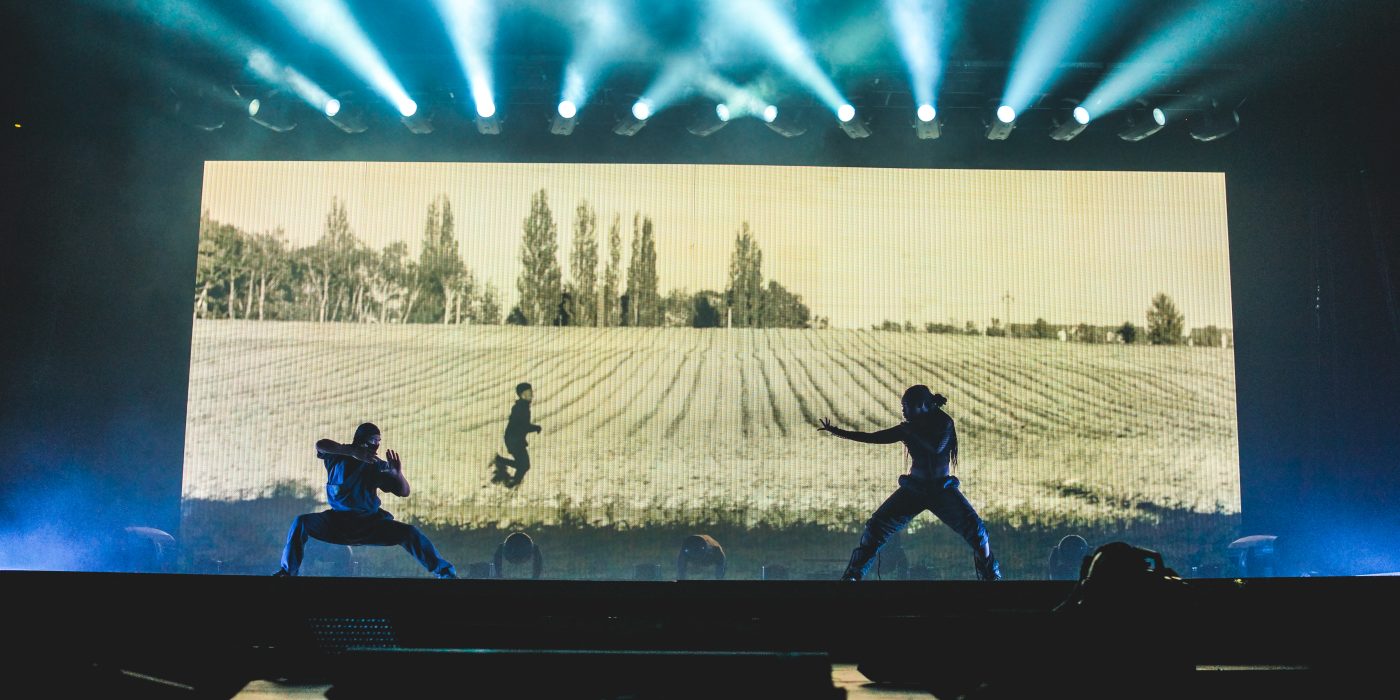
Hip-hop is 50 years old, depending on how you count, and is currently the most commercially dominant music genre on earth. It is also, by any serious measure, the most creatively diverse – encompassing everything from Kendrick Lamar’s literary concept albums to Yeat and Kylie Jenner’s hyperpop-adjacent collaborations to the drill subgenres fragmenting across dozens of city scenes worldwide. The breadth is genuinely extraordinary.
The week’s hip-hop news is instructive about where the genre sits. JPEGMAFIA appearing on BTS’s Arirang – an artist known for chaotic, confrontational noise rap collaborating with one of the smoothest pop operations on earth. Jay-Z announcing anniversary shows built around two albums that are 25 and 30 years old respectively, and having those shows feel like events rather than nostalgia. Dylan Brady of 100 Gecs doing his solo thing while the internet simultaneously processes a Yeat and Kylie Jenner track.
These things can coexist because hip-hop has never been a genre with a narrow definition of itself. From the beginning it incorporated funk, soul, jazz, rock, and eventually everything else – not as genre tourism but as genuine cultural synthesis. The genre’s DNA is combinatorial. It was always going to end up here, expansive beyond any single description.
What’s worth watching right now is the generational handoff. Kendrick Lamar at the top of the commercial and critical hierarchy is in his late 30s. The artists coming up beneath him are operating in a musical environment shaped entirely by streaming – they’ve never known a music industry structured around physical sales or even album cycles in the traditional sense. How that changes the kind of music being made, and what it means for hip-hop’s future shape, is the interesting open question.
The genre has survived corporate consolidation, sampling lawsuits, streaming fragmentation, and the complete transformation of the music industry’s economic model. At 50 years old, with more global reach than any music ever developed by human beings, hip-hop seems structurally positioned to survive whatever comes next. The real question is always the same: who’s going to say something worth hearing? Right now, a lot of people are.

There’s something about hip-hop’s expansion that I feel in my body when I listen it moves from the chest outward, always reaching. The way the article describes it as containing multitudes resonates so deeply with me. When music holds that much space, it mirrors the nervous system itself adaptive, expansive, never quite finished processing. I’ve been meditating to certain lo-fi rap instrumentals lately and the effect is genuinely calming in a way I didn’t expect from the genre.
Wendy, I love the way you put that, but I’d gently push back, country music fans say almost the exact same thing about their genre and get laughed out of the room by music writers. When hip-hop does it, it’s ‘containing multitudes.’ I’m not saying hip-hop doesn’t earn it, it does, I just wish the same generosity got extended a little more broadly.
The comparison to classical music tradition is one I think about often. In Western classical tradition we also have 50 years, sometimes 500 years of history being reinterpreted by each generation. Hip-hop does this with sampling it is literally building new architecture from existing stones, which is not so different from how Brahms referenced folk melodies or Shostakovich quoted himself. What is remarkable, as the article notes, is the speed at which this genre absorbs and transforms. Classical music needed centuries for such evolution. Hip-hop has done it in five decades. This is extraordinary.
50 years and still the most restless music on the planet. Techno had its moment of dominance and then calcified. Hip-hop never calcified. That’s the difference.
I’m going to need to know which pressing of Wendy’s comment this is referencing because I can’t find the original. But setting that aside , the argument that hip-hop “contains multitudes” is one I’ve heard applied to rock and roll at every stage of its life, and it was true then and it’s true now. What I’d add, as someone who came to hip-hop late and through vinyl reissues of Public Enemy and De La Soul, is that the genre’s relationship to its own archive is unlike any other. Hip-hop samples itself, argues with itself, builds monuments to its own history in real time. That’s not just expansion, that’s a kind of self-consciousness that most genres never develop. I still wish the drums breathed more, but that’s a personal failing I’ve made my peace with.
There’s something humbling about reading this as someone who makes music in a much quieter corner. Hip-hop built its own infrastructure, its own vocabulary, its own economy, all at the same time as making the music itself. I don’t know many genres that managed all three simultaneously and kept the artistry intact.
Walt, I appreciate the humility, but let me push back gently. Hip-hop building its own infrastructure is real , but jazz did that first and got systematically dismantled by exactly the commercial pressures that hip-hop is now navigating. I’m not saying hip-hop won’t endure. I’m saying the Blue Note era proved infrastructure isn’t enough protection against the industry’s appetite. Worth watching what happens as the streaming data matures.
Look I’m coming at this as a guitar guy so maybe I’m biased, but the thing that always got me about hip-hop’s expansion is that it absorbed everything , and I mean EVERYTHING , including guitar. J. Cole and Lil Wayne both play guitar. There are trap beats built around riffs that would make Clapton nod. The genre ate rock and roll’s guitar DNA and built something new with it, which honestly as a player I find more flattering than threatening. The multitudes thing is real.
Coming at this from a kwaito and gqom perspective , hip-hop’s expansion is something we’ve watched feed back into township sounds for years, and then those sounds feed back into hip-hop globally. DJ Lag, Distruction Boyz, Busiswa , these artists are part of hip-hop’s expansion too, even if the American music press doesn’t always connect the dots. The genre containing multitudes isn’t just a US story!
I’ll be honest with you , I came up in a household where hip-hop was the enemy. County Tipperary in the 80s, my dad thought rock and roll was already too American, so rap was basically the devil’s own language as far as he was concerned. Then I moved to Boston in ’99 and my roommate had every Biggie and Nas album pressed against the wall like they were religious texts. And I got it. Slowly. Because what hip-hop was doing , the storytelling, the specific details of a specific place, the way it carried a whole community’s anger and joy in one breath , that’s exactly what a good Irish ballad does. Different clothes entirely, but the same soul underneath. The article’s right that it contains multitudes. Every tradition worth a damn does.
Frank, what you just described , growing up in a home where the music was the enemy and then finding your way to it anyway , that’s its own kind of testimony. Gospel taught me that transformation doesn’t announce itself. It just happens in the listening. The fact that hip-hop found you in County Tipperary through whatever crack in the wall it could find , that’s not an accident. That’s the music doing what it’s always done.
The phrase “contains multitudes” is doing so much lifting here, and I mean that as genuine praise. In classical Arabic poetics there is the concept of the qasida , a form that was never just one thing, that held the elegy and the praise poem and the satire all inside the same architecture. Hip-hop has always functioned like that. The commercial dominance is almost beside the point; what matters is that it never resolved itself into a single meaning. That refusal to simplify is the genre’s greatest formal achievement, not any individual record.