 Into The Music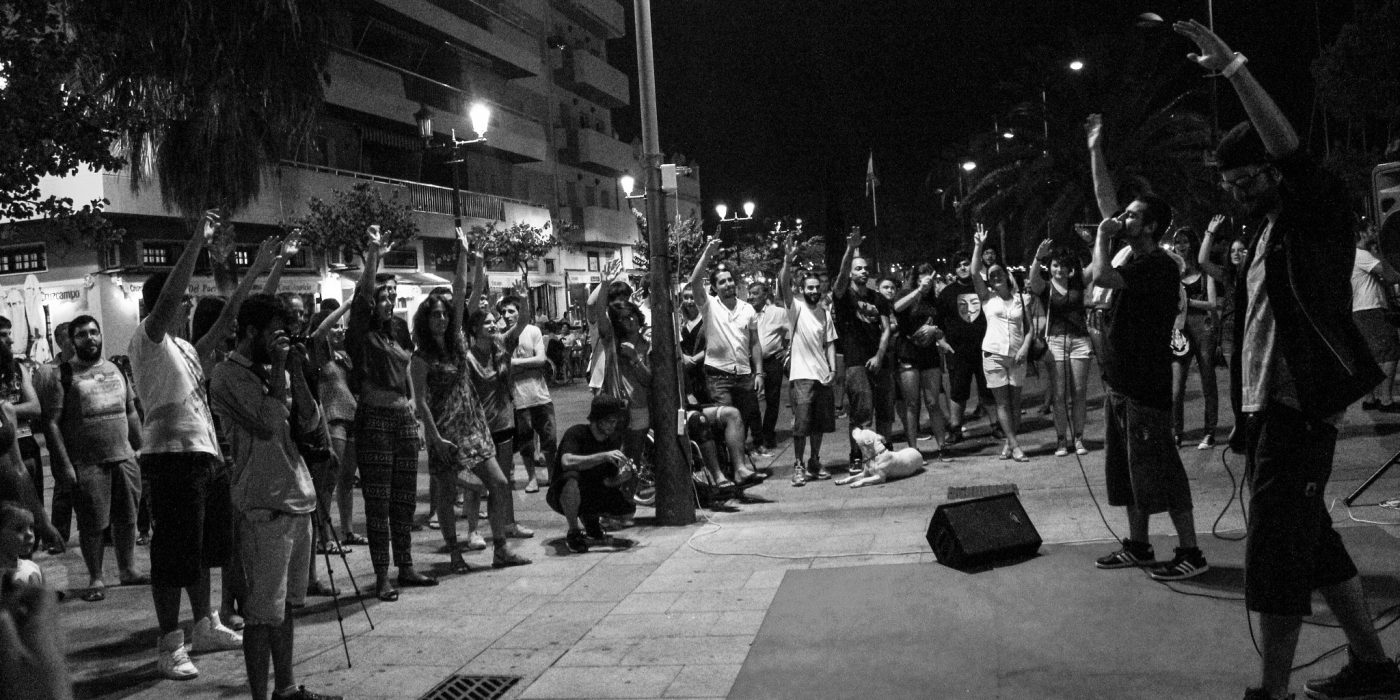
Hip-hop began on a block party turntable in the South Bronx in the summer of 1973 and became, over the following fifty years, the most globally dominant musical form in human history. That trajectory is worth saying plainly, because the critical establishment spent approximately three decades arguing about whether it was going to last.
It lasted. Then it won. Then it ate everything.
DJ Kool Herc’s innovation, isolating the breakbeat by switching between two copies of the same record, created the rhythmic foundation for what followed. But the form spread and mutated at a speed that had less to do with record label strategy than with the specific quality of hip-hop’s relationship to language. Rap rewarded wordplay, narrative, wit, anger, autobiography, and invention simultaneously. It was a format that could absorb almost any content and transform it into something that could be performed live, shared informally, and understood without formal musical training.
The genre did not move in a straight line. It exploded in multiple directions at once, and those directions were frequently in tension with each other. Gangsta rap and conscious rap were not merely different stylistic approaches. They were arguments about what hip-hop was for, what it owed its community, and who it was talking to. Those arguments were never fully resolved. They ran through the genre’s entire history and continue to run through it today. That productive tension is part of what kept the music vital when a dozen other genres from the same era calcified.
The regional explosions mattered. New York gave the genre its initial vocabulary and its critical prestige. Los Angeles gave it its commercial ceiling and its cinematic mythology. Atlanta spent twenty years dismantling both of those frameworks and rebuilding the whole thing from scratch, creating trap music and then watching trap music spread so completely that its fingerprints are now audible on country, pop, and electronic music. Houston moved at its own tempo, literally and figuratively, inventing chopped and screwed and insisting that the rest of the country catch up rather than the other way around.
The streaming era scrambled the geography further. A rapper from anywhere could, in principle, reach everywhere. In practice, new regional scenes developed, in Chicago, in the Bay Area, in the UK, in Nigeria, in Brazil, each with its own relationship to the original form and its own reasons for maintaining or abandoning that relationship. The genre’s capacity to export its formal structures while accepting local modifications is genuinely unusual in popular music history. Most genres travel and become diluted. Hip-hop traveled and became amplified.
BTS debuting at number one on the Billboard 200 this week with “ARIRANG” with the biggest sales week for an album by a group since the chart began tracking by equivalent units is the latest data point in an argument that has been obvious for a while. The global pop that conquered the past decade was built largely on hip-hop infrastructure, its rhythms, its production aesthetics, its relationship to persona and branding, even when it came from Seoul or Lagos or London rather than New York or Atlanta.
There is no single sound that is hip-hop today, which is probably the most honest measure of how completely the genre won. When a musical form becomes the dominant vocabulary of an entire cultural moment, its borders dissolve. The conversations about what is and is not “real” hip-hop, which have been happening since at least the mid-1980s, are both completely irrelevant and completely understandable. Irrelevant because the genre transcended gatekeeping long ago. Understandable because any form that transforms as dramatically as hip-hop has transformed carries real losses alongside the real gains.
What matters is that the music is still being made. The block party logic, the idea that anyone with access to the right tools can transform borrowed sounds into something new, is still operational. The arguments are still happening. The regional scenes are still developing. Fifty years after Kool Herc, the genre shows no signs of being done surprising people who thought they had figured it out.
The South Bronx block party origin story is documented enough to be uncontroversial. What is less discussed is how the production logic , isolating the break, extending the percussion loop , anticipated the structural grammar that minimal techno would formalize a decade later by completely different people in completely different cities. Parallel evolution is interesting.
I taught music for thirty-one years in Accra and then in Atlanta, and I have watched this genre go from something my American students’ parents were suspicious of to something that has genuinely restructured how young people understand rhythm, language, and identity across every continent I am aware of. The article is right to use the word ‘rewrote.’ That is not an exaggeration. What happened to popular music after 1979 is not separable from what started on that block in the South Bronx. My students in Ghana knew Biggie before they knew Bach, and that is simply a fact about the world we live in.
Good article but I’ll say what nobody wants to say: the whole ‘hip-hop rewrote everything’ frame still ends up centering American hip-hop as the engine while treating everywhere else as downstream. Afrobeats wasn’t influenced by hip-hop , it was running a parallel evolution and the two have been in genuine conversation since at least the late 90s. The global dominance story needs more geography.