 Into The Music
Irish folk and singer-songwriter music has a particular global reach that’s hard to explain purely in terms of the music itself. The tradition runs deep, from the ballad singing that predates recording technology through the folk revival of the 1960s and into the contemporary generation of artists like Dermot Kennedy, Glen Hansard, Hozier, and Villagers, each of whom has built substantial international audiences while remaining clearly rooted in something Irish.
The instrument that makes Irish folk recognizable is often the uilleann pipes, which have a drone and chanter configuration that produces a sound unlike any other pipes tradition. But the more fundamental characteristic is something about the relationship to narrative: Irish traditional music is built around stories, around naming specific places and specific losses, and that relationship to the specific carries through even into contemporary pop that doesn’t use a single traditional instrument.
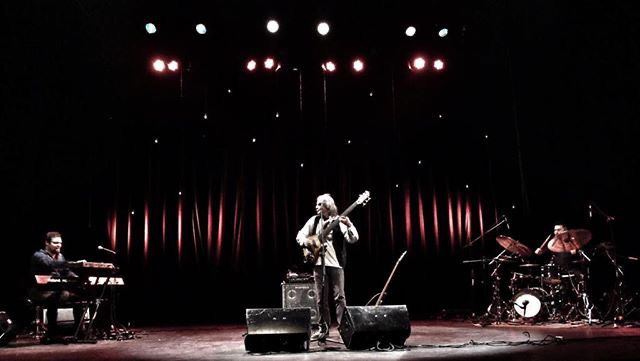
Glen Hansard, performing at the Old Town School of Folk Music in Chicago tonight, is one of the clearest examples. His work with The Frames and his Oscar-winning contribution to Once established a template: raw emotion, acoustic instrumentation, the voice as the primary instrument, and lyrics that locate feeling in specific images rather than abstract declarations. When he plays in a small venue, the intimacy is the point.
Dermot Kennedy’s work with The Weight of the Woods is drawing explicitly on this tradition while working in a more commercially accessible register. The Irish instruments, the recorded-at-home quality, the reference to a specific physical landscape behind his house: these are choices that connect backward to a very long line.
The global appetite for this kind of music probably has something to do with what it lacks, which is polish in the sense of distance. A tradition that’s fundamentally about proximity, to feeling, to landscape, to other people, travels because proximity is what a lot of recorded music has engineered away.


What this piece gestures at but doesn’t fully say is that Irish folk’s reach has a lot to do with diaspora infrastructure , the same way chimurenga traveled through the Zimbabwean diaspora, or how mbira music found unexpected audiences in Japan and Germany through the work of people who had a reason to carry it. The Irish diaspora is massive and centuries old, and it seeded the music into communities everywhere. Thomas Moore, the ballad tradition, the emigrant songs , they were doing cultural maintenance across oceans long before anyone thought to theorize it. The music travels because the people traveled, and they needed it to remember who they were.
I keep coming back to this line about the ballad tradition , there’s something in Irish folk lyrics specifically about accepting loss without being defeated by it, and I think that’s why it travels. I was learning a Joni Mitchell song last year and kept thinking about how that same quiet resilience runs through her writing too, and she’s Canadian but her roots wind back. Some emotional truth just translates across every border.
I’ve interviewed enough Irish folk artists over the years to know that ‘why does it travel’ is a question that makes them slightly uncomfortable , there’s a tension between being proud of the reach and being wary of what gets simplified or romanticized in the crossing. The Pogues are a good example: enormous international impact, but ask anyone in the trad scene and you’ll get a complicated answer. The music travels, but it doesn’t always arrive intact.
Patrick this is so interesting to me because I always assumed Irish folk artists LOVED that their music traveled, but I get it, there’s a difference between your music being celebrated and it being consumed without context. Anyway for me personally I came to it through a very mainstream door, a film soundtrack, and I don’t feel bad about that! The music grabbed me and I followed it back to the source. Isn’t that how it’s supposed to work?
The piece gestures at diaspora and tradition but I think it undersells the compositional sophistication of the Irish folk revival. The reason it travels isn’t purely emotional or cultural, it’s structural. The modal harmony, the way Irish melodies sit in Dorian and Mixolydian modes, creates a kind of tension and resolution that cross-cultural listeners respond to even without knowing why. Planxty understood this. The Chieftains understood this. The sentiment gets all the credit but the music theory is doing real work underneath.
The line about accepting loss without being defeated by it reads like a thesis statement for why this music keeps finding audiences. There’s a structural similarity to what Arcade Fire does at their best, that quality of grief that doesn’t collapse into self-pity, the kind of sadness that feels like it belongs to everyone in the room. Irish folk got there centuries earlier and without the stadium production. That’s not a knock on anyone, it’s just interesting to trace where that emotional architecture comes from.
The diaspora angle is undersold in most of these conversations and James Abara’s comment above is pointing at the real thing. Irish folk travels partly because Irish communities carried it everywhere they went and kept it alive in new soil. Taylor Swift does something structurally similar with her fanbase, she creates these portable communities that keep the music circulating independently of radio or streaming. The mechanisms are different but the underlying logic of how music sustains itself across distance and time is very similar. Both traditions reward close listening and reward the people who do the carrying.
The piece is warm and I appreciate the depth of it, but “a small island’s music” in the title is doing some quiet work I want to name. Nigerian music comes from a country of over 200 million people and it had to fight considerably harder to be taken seriously on a global stage than Irish folk ever did, despite having just as much compositional sophistication and just as much emotional weight. I’m not saying the music doesn’t deserve its flowers, it absolutely does. I’m asking why some small traditions get the “how do they travel so far” feature and others have to fight to be called legitimate at all.