 Into The Music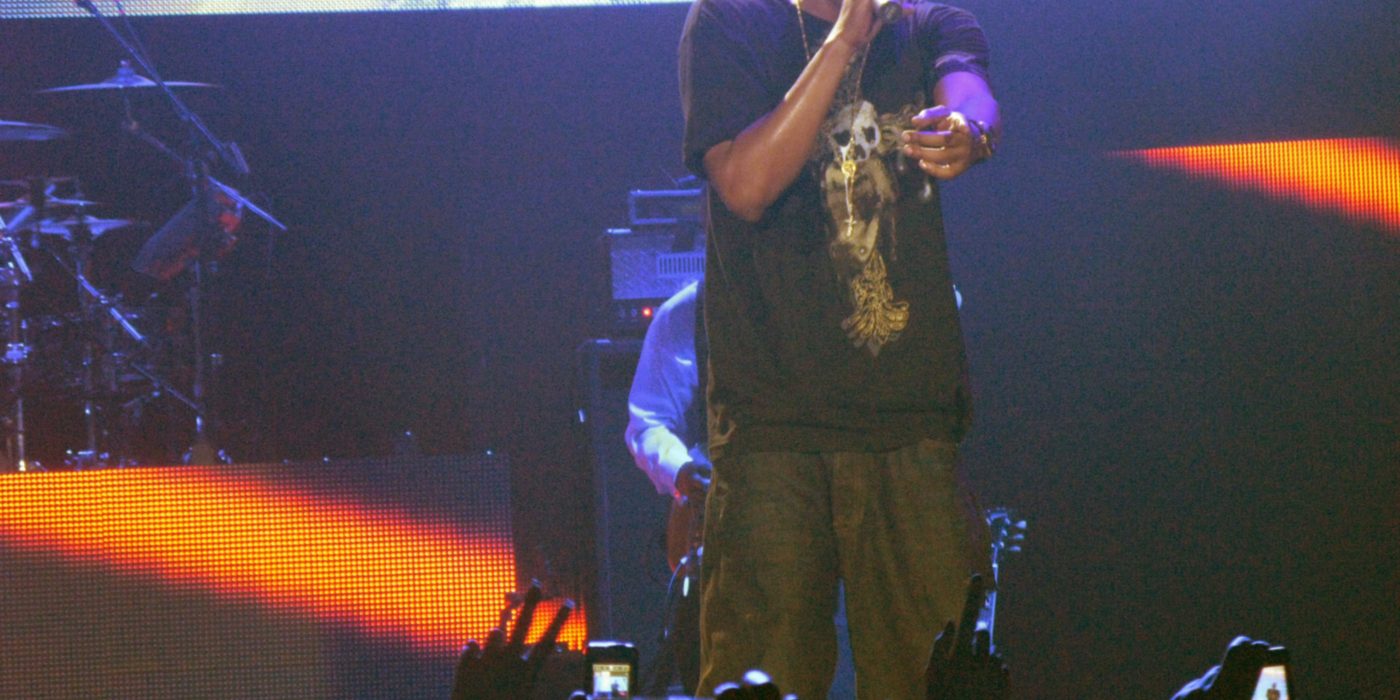
Jay-Z gave his first major interview in years this week, sitting down with GQ, and he did not come to make peace. He came to rethink the rules.
In the wide-ranging conversation, Jay-Z addressed the Kendrick Lamar and Drake beef directly, and his take landed somewhere surprising. He praised Kendrick’s Super Bowl halftime show, acknowledged the excitement of the battle format, and then said something that will probably bother people for weeks: maybe battling no longer belongs at the center of hip-hop culture.
His reasoning started with the four pillars of hip-hop: breakdancing, graffiti, DJing, and battling. Three of those, he noted, have already drifted from the culture’s core. Breakdancing became an Olympic sport. Graffiti became gallery work. The DJ went from being the frontman to being invisible on most major releases. Battling is the last one standing. And Jay-Z is not sure it should be.
“We grew from breakdancing. We love graffiti,” he told interviewer Frazier Tharpe. “Before, the MC’s job was to bring attention to the DJ. Now the last pillar is battling, and these are all the things that come with it.”
The things that come with it, in his view, include toxic stan culture, kids being dragged into diss tracks, and a media ecosystem that rewards escalation over music. He pointed to the forced binary that the Kendrick-Drake situation created, where fans of one are expected to hate the other regardless of what either actually makes. That dynamic, he said, pushes hip-hop backward.
Jay also addressed his own history in the genre’s battle tradition. He named his history with Nas, said he genuinely regrets how personal it got, and acknowledged a certain hypocrisy in offering this critique after spending his career mastering the same format. “It takes growth to arrive at this place, because I’ve done the bullshit too,” he said.
There is something worth sitting with in all of this. Jay-Z built his mythology in part through battles. “Takeover” is a monument. The fact that he is now suggesting the whole tradition might be worth retiring does not read as weakness. It reads as someone who has seen what the format costs and is trying to name that cost clearly.
He also linked the current climate around stan culture to broader political forces, writing in a message to Tharpe that there is a right-wing agenda working to silence voices in the community, and that fans are playing along “in the name of this insane thirst of Stan culture.” That is a provocative connection, but not an unreasonable one to make.
His summer tour will bring him back to New York for shows tied to both “Reasonable Doubt” and “The Blueprint.” He is returning to the stage at a moment when hip-hop is still sorting through the wreckage of last year’s most public beef. The interview feels like his attempt to put some framework around what happened and what it means for the genre going forward.
Whether you agree with him or not, the argument is more interesting than a victory lap. He is not declaring a winner. He is questioning whether the game itself is worth playing anymore.
The idea that battle rap might be structurally exhausted is more interesting than Jay-Z perhaps intended. Competition requires a stable aesthetic commons , a shared understanding of what ‘winning’ looks like. When the frameworks fragment, as they have, the battle format loses its referential ground. Industrial music went through something similar in the 90s: once the confrontational posture got absorbed into mainstream advertising, the gesture stopped carrying weight. Jay-Z isn’t just making a personal statement here , he’s describing a structural condition.
Iris’s point about a shared aesthetic commons is actually what makes this interesting globally. In cantopop, the equivalent battle ground , the dueling ballad tradition, the direct musical responses between artists , lost its traction not because anyone declared it over, but because streaming fragmented the audience until there was no longer enough shared reference pool to make the stakes feel legible to a general listener. What Jay-Z might be sensing isn’t unique to hip-hop. It’s what happens when mass culture stops having sufficient overlap to make any rivalry mean something beyond its own subculture.
Iris, I hear you on the structural argument but I think you’re overcomplicating something simpler. Battle rap didn’t exhaust itself , the incentive structure changed. When Jay came up you either won or you lost and everyone in the borough knew it for years afterward. Now winning means a clip goes viral for three days and disappears. Nas versus Jay was about who OWNED New York, full stop. Nobody’s fighting for permanent legacy anymore, they’re fighting for the news cycle. That’s the actual loss.
Rick, yes , and what you’re describing is exactly the grief underneath all of this, no? The incentive used to be desire, the need to be seen, to be the one standing at the end. That heat, that wanting , it was romantic in its own fierce way. Now you’re right, it’s all algorithm and managed narratives. The passion leaked out somewhere and we’re left with performance without hunger.
Competition needs stakes. In techno you eat or you don’t. Battle rap ate itself.
Jay-Z retiring the battle. Eminem still in the basement sharpening the knife. The genre is fine.
I’ve sat across from enough artists to know when something is a genuine rethink versus a graceful exit narrative, and this GQ piece reads as a bit of both. Jay-Z is not wrong that the incentive structure has changed , he’s been saying a version of this for years. What I’d want to probe is whether ‘battling might be done’ is a descriptive claim about the culture or a prescriptive one that protects his own legacy from a challenge he’d rather not take.
battle rap died when rappers got lawyers.