 Into The Music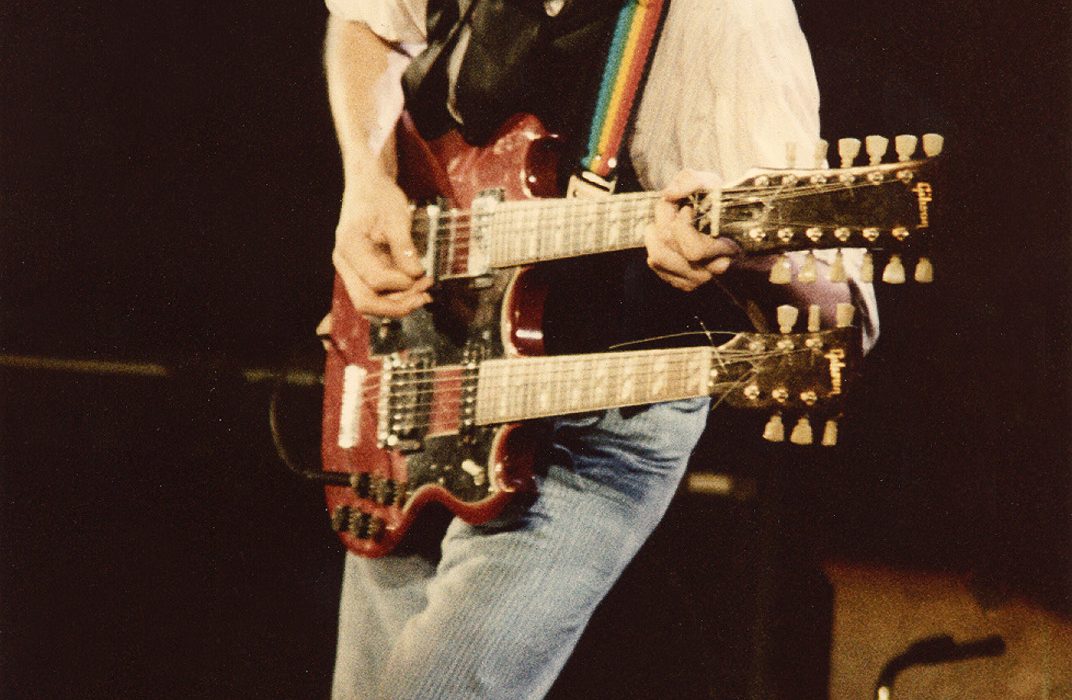
Jimmy Page is not done making the case for what Physical Graffiti actually means. On Monday, the Led Zeppelin guitarist shared a home demo of “Ten Years Gone” on his YouTube channel, giving the closest thing yet to a window into how one of the band’s most beloved songs came to exist.
The demo was recorded by Page alone at Plumpton Place, his studio, and it is striking how complete the song already was before the band ever touched it. The iconic guitar lines, the solo, the melodic bass turnaround, all of it is there. What’s absent is everything that Plant, Bonham, and Jones brought to it: the vocal line, the lyrics, the drums. But the skeleton Page lays out here is the song. The rest, in a sense, was decoration.
Page wrote in the video description that he brought this rough mix to the band at Headley Grange, that Plant came up with “extraordinary” lyrics for the music, and that what emerged became “Ten Years Gone.” There is something quietly stunning about hearing how much one person held in his head before anyone else was in the room.
This release is part of the ongoing celebration of Physical Graffiti’s 50th anniversary, a celebration that has been running since last year and shows no signs of stopping. The band already released a live EP featuring performances from the 1975 Earl’s Court run and the 1979 Knebworth show. Page also released a home demo of “The Rain Song” in 2024, offering a similar glimpse at the architecture underneath Houses of the Holy.
The archival push feels intentional, not just commercial. These demos don’t diminish the records, they deepen them. You hear how much arrived fully formed in one person’s hands, and you start to understand why the band sounds the way it does when everyone finally shows up. Collaboration amplifies something that was already real. The music on Physical Graffiti didn’t emerge from group improvisation. It came from Page’s incredibly detailed internal architecture, and then it grew.
“Ten Years Gone” has always occupied a strange place in the Led Zeppelin catalog. It’s not a radio staple, not a live warhorse, not a party trick. It’s one of those songs that reveals itself slowly, that asks something of you, that feels like it was written for a particular kind of listening. Hearing where it started makes that quality feel even more deliberate.
There is no timeline for further releases, but given the pace of what the Page camp has been doing, more is probably coming. Fifty years on, the record that most people consider Led Zeppelin’s most ambitious still has things to say.
OK Physical Graffiti is already one of the greatest double albums ever made and now Page is releasing HOME DEMOS?? The way “Ten Years Gone” builds , that layered guitar sound, those multiple tracks weaving around each other , and to hear where that STARTED in some home recording is unreal. This is like finding out how a great salsa arrangement began as a sketch on a napkin. The craftsmanship that goes into making something sound effortless , this is exactly what demo releases are for. Zeppelin heads are eating good right now.
What interests me in a home demo is not the melody or the chords , those are obvious once you know the finished version , but the tempo. How fast was Page thinking before the arrangement discipline of the studio imposed itself? “Ten Years Gone” has a very specific momentum, a kind of forward motion that feels inevitable but must have been constructed. Hearing the original pulse before the layering is the whole point. Can approached their recordings the same way , the raw motorik skeleton before the texture arrived. The skeleton always tells you what the song actually is.
Physical Graffiti is an album I have in four pressings , original Swan Song, the 1994 remaster, the 2015 Jimmy Page remaster on vinyl, and a clean UK first pressing I found at a record fair in Bristol in 2018 , and I still find new things in it every time. ‘Ten Years Gone’ in particular rewards this kind of close listening: the way the guitar parts don’t so much harmonize as occupy separate spaces in the stereo field, each one complete on its own. A home demo from Page’s own recordings, before that arrangement existed, is a genuinely significant document. This isn’t nostalgia merchandise , it’s an actual window into compositional process. I hope they handle the release properly and don’t bury it in a streaming-only drop.