 Into The Music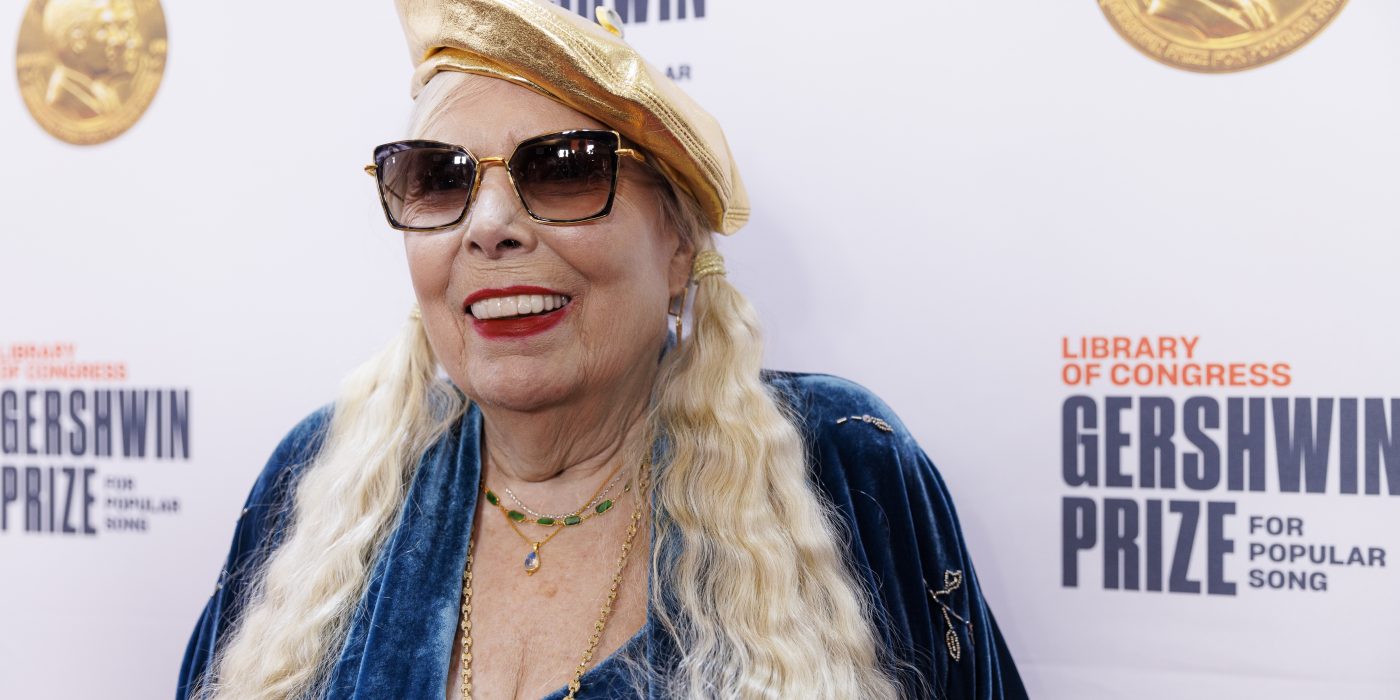
Joni Mitchell walked onto the stage at the 2026 Juno Awards and received a standing ovation before she had said a single word. That detail matters. Not because it was surprising, but because it was earned, and watching it happen felt less like an awards ceremony and more like a collective exhale from an entire country that has been holding its breath for a decade.
Mitchell received the Lifetime Achievement Award, only the third person to receive that distinction since CARAS established the honor. Prime Minister Mark Carney introduced her with what can only be described as genuine warmth, the kind that reads as sincere even through a screen. Mitchell accepted the trophy, and then she spoke.
She talked about the brain aneurysm she suffered in 2015. She called it, oddly, a change for the better. She quit smoking while in the coma. Her house filled with nurses, then with women, a shift from decades on the road surrounded by men. “My life has changed for the better out of a catastrophe,” she said, “like a phoenix.” It was not a speech designed to inspire. It was a woman reporting on what happened to her and finding some grace in it, which is what she has always done, and it landed harder because of that.
Then she joined Sarah McLachlan and Allison Russell for a tribute medley and sang “Big Yellow Taxi.” She has not attended a public event in Canada since 2013. That absence has not diminished anything. If anything, every reappearance since her recovery has felt charged with something beyond nostalgia, a recognition that her continued presence in the world is not guaranteed, and that when she shows up, it means something.
It is worth dwelling on what the Lifetime Achievement Award actually means when it goes to someone like Mitchell, as opposed to the more bureaucratic honorifics that get handed out at these events. Mitchell did not just have a career. She invented a mode of autobiographical songwriting that influenced practically every subsequent confessional songwriter without their always knowing it. She built open tunings that rewired how the guitar could be played. She moved through folk, rock, jazz, and orchestral pop not because trends demanded it but because she was following a thread only she could hear. The results were sometimes challenging, often misunderstood, and in retrospect, almost uniformly ahead of their time.
That she is here to accept this is not nothing. Her 2015 aneurysm was serious enough that her recovery was never certain. The surprise Newport Folk Festival set in 2022 felt miraculous. Her Joni Jam concerts and the Grammy performance of “Both Sides Now” have each been freighted with the awareness that these windows may be limited. Watching her in Vancouver this weekend, you are reminded that her voice is not what it was at 25 or 35, and also that it carries something now that it could not have carried then.
Mitchell is the third Lifetime Achievement recipient, following Anne Murray last year and Pierre Juneau, the broadcasting executive for whom the awards are named, in 1989. She has four prior Junos, including her 1981 induction into the Canadian Hall of Fame. She was named a Companion of the Order of Canada in 2002. The resume is impeccable and also beside the point. What the room responded to on Sunday was not the list of accomplishments. It was the woman standing there, still here, still lucid, still capable of saying something true.
She has not been to Canada publicly since 2013. That she came back for this, and that she chose to perform, says something. She could have accepted by video. She could have sent thanks through a representative. She did not. She showed up and she sang, and “Big Yellow Taxi,” a song written more than fifty years ago about environmental destruction and the cost of development, still sounds like it was written last week. That is the part that never gets old about Mitchell: the songs do not age because the problems do not age.
The Junos gave her the right award. Canada took a breath and let it out slowly. That is about all you can ask for.

What strikes me reading this is how Joni Mitchell’s entire early career was really the tail end of the folk revival meeting the singer-songwriter moment , she came up in an era when you still had to prove yourself in coffeehouses, the same circuit that Pete Seeger and Odetta helped build. ‘Big Yellow Taxi’ is from 1970, which puts it right at that hinge point where acoustic folk was being pressured by rock production on one side and the countercultural moment cresting on the other. The fact that she’s still performing it in 2026 and getting a standing ovation before she says a word , that’s the kind of staying power you don’t manufacture. You earn it.
The detail about the standing ovation arriving before she spoke a word is the kind of moment that oral storytelling traditions understand deeply , presence precedes language. In Igbo performance culture there’s a concept of the performer whose reputation enters the space before their body does. Joni Mitchell has achieved something similar through decades of work that refused to be reduced to a single image of itself. ‘Big Yellow Taxi’ is a deceptively simple song that keeps accumulating new meaning with each decade. The paving of paradise reads differently now than it did in 1970, and Mitchell’s decision to sing it in 2026 at the Junos , in Canada, where she’s from , has a completeness to it that feels almost deliberate.