 Into The Music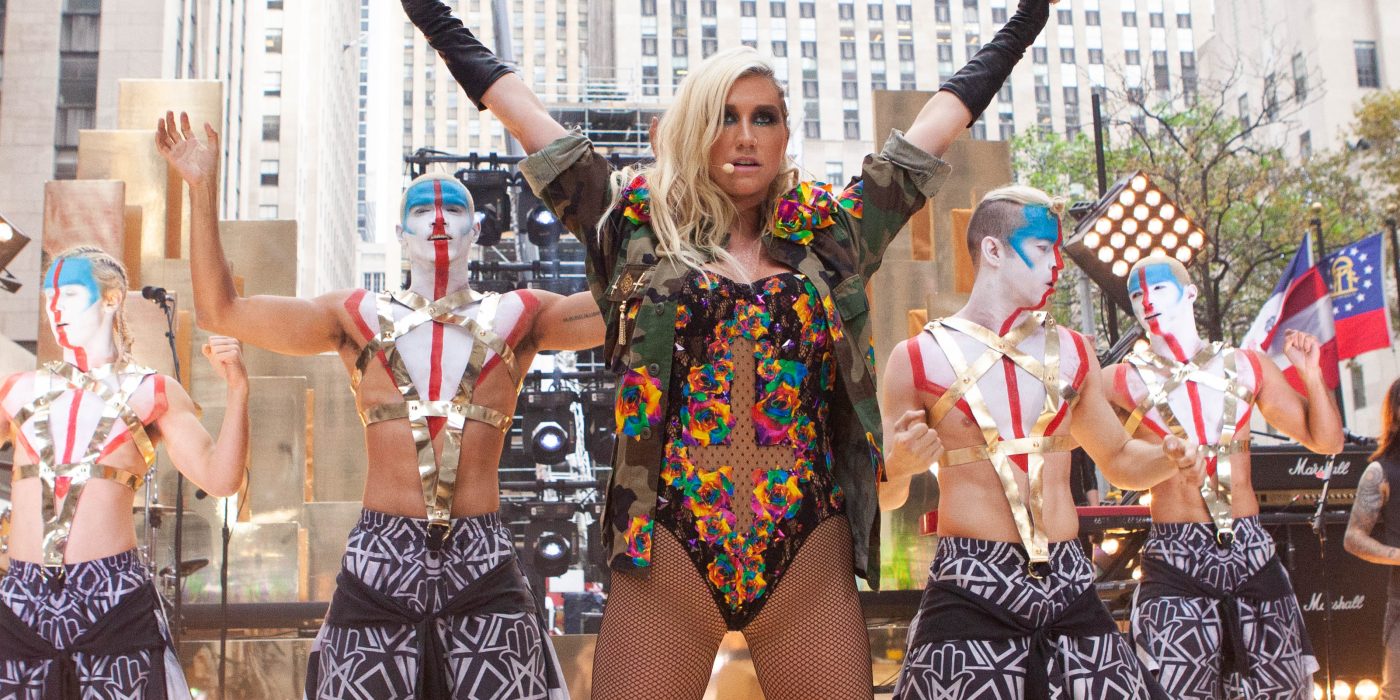
Kesha announced her Freedom Tour this week, and the press release she wrote to accompany it is one of the more quietly remarkable things she has put into a standard industry document in years.
“This summer we are reclaiming our bodies, our voices, and our joy,” she wrote. “We have survived. Now we get to be free. Let’s be free together.” She went on: “I’ve lived through the fire. This tour is about what comes after. Freedom isn’t just leaving something behind, it’s discovering that what you have lived through has made you magnificently who you are.”
That is not typical tour announcement language. It is a mission statement, and for Kesha, a decade removed from the most publicized legal battle in recent pop music history and now on the other side of it, working independently after years under a major label deal she spent years trying to escape, it lands with a specificity that press releases rarely carry.
The tour runs from May through late August, with North American amphitheater dates bookended by a European run that includes BST Hyde Park in London and Bonnaroo. Chromeo joins for most of the dates, and Sizzy Rocket, Meek, and Erika Jayne also appear on various legs. The routing is substantial, taking her through Red Rocks, the Kia Forum, and arenas from Tennessee to Toronto.
The timing matters. Last year, Kesha released her first independent album, a self-titled record that arrived simply punctuated with a period. The statement of it was in the presentation as much as the music: here I am, making the art I want, on my own terms, with no one between me and the audience except a period. The record was received as a creative recalibration, not a triumphant comeback, and that was the right read. She was not reclaiming past glories. She was starting something new.
The Freedom Tour is the live extension of that logic. Naming a tour “Freedom” after what Kesha has been through is not subtle, and it is not trying to be. She is making the subtext text. She has always had a talent for pop music that carries more weight than its sheen suggests, and there is an argument that she is doing the same thing here: making arena pop that is also, if you are paying attention, a very specific personal statement.
Chromeo as a supporting act is an interesting, slightly unexpected choice. They are neither thematically aligned with the narrative Kesha is building nor trying to be. They are just a good time. Which is, itself, a choice. Freedom means more than freedom from something. It also means the freedom to just have fun, to bring in the retro funk duo you like, to do the dancier shows you want to do.
More new music is coming later in the year, according to her team. Given that she now controls her own creative output in a way she did not for most of her career, that pipeline could produce anything. The Freedom Tour is where she figures out who she is in front of an audience again, on her own terms, after years of fighting to get here.
That is worth seeing.
I come at this from reggae and ska, so the idea of an artist claiming their freedom isn’t abstract to me , it’s in the bones of the music I grew up loving. The whole roots tradition is about exactly this: finding your voice when systems are designed to take it from you. Kesha’s story doesn’t map perfectly onto that lineage, obviously, but the impulse , to announce yourself on your own terms after years of being squeezed , that feels familiar. I’ll be curious whether the tour actually delivers that energy or whether it stays at the level of the press release. The statement is the easy part. The stage is where you find out if it’s real.
What interests me is the strategic dimension of calling it a Freedom Tour rather than something more oblique. It forecloses ambiguity before the first ticket goes on sale , you arrive knowing what narrative frame you’re meant to hold. Artists from the city pop era I love rarely made their personal politics that legible in advance; the meaning accumulated through the music itself. I don’t say that as a criticism exactly, just as an observation about how much the relationship between artist statement and audience expectation has shifted. Kesha is asking you to bring a specific emotional context into the room, and that’s a real artistic bet.
Keiko, your point about the name foreclosing ambiguity is sharp, and it makes me think about how naming functions differently across musical traditions. In chimurenga , the music Thomas Mapfumo developed in Zimbabwe as an act of resistance against colonial rule , the very act of naming was political. Mapfumo did not call his music ‘protest music.’ He named it after the revolutionary struggle itself, and that naming was a declaration before a single note was heard. When Kesha calls this the Freedom Tour, she is doing something similar: the title is not a description of what will happen, it is a claim being staked. The question then becomes, as you rightly suggest, whether the music will fulfill the promise of the name. In chimurenga, it always did. Whether Kesha’s pop context can carry the same weight is a genuine question, but I do not think she uses that word casually.
A press release described as ‘quietly remarkable’ is still a press release. I will believe the freedom when I hear it.
I understand your skepticism, Margot, but I think there is something in the naming itself worth sitting with. In Norwegian music , and in the folk and metal traditions I love , an artist claiming their season of freedom is almost a sacred announcement. It is like the first real thaw after a long winter. You do not wait to believe in spring until you have felt the warmth for a full week. The press release may be just words, but sometimes words spoken aloud are the beginning of the thaw. I hope she finds what she is looking for.
I keep coming back to the phrase ‘quietly remarkable’ in the excerpt. That combination of words , quietly, remarkable , is doing so much. As someone who writes songs and agonizes over single words for days, I notice when someone chooses restraint over declaration. She could have come out screaming and nobody would have blamed her. Instead: quietly remarkable. That’s the whole thing right there, honestly.
Bare respect for the press release. She didn’t have to explain herself and she did it anyway. Freedom Tour is a bit on the nose but after everything she went through , yeah, fair enough. Earned it.
What strikes me about the Kesha situation is how the naming of this tour does something that marketing usually kills: it stays vulnerable. Pop artists are constantly pressured to reframe their pain into empowerment-as-product, and there’s a version of this announcement that would have felt exactly like that. But “Freedom” after what she went through isn’t a brand pivot , it’s more like someone finally being allowed to exhale publicly. I keep thinking about Taylor’s Eras framing and how that was also a kind of reclamation, but Kesha’s is rawer, less packaged. The press release she wrote herself matters a lot here. Her voice in it, not a publicist’s, is what makes it “quietly remarkable” instead of just loud.
Sara you said it perfectly , staying vulnerable is the hardest thing! I grew up going to polka festivals where the music was all about community and joy even when times were hard, and that same spirit is what I hear in Kesha choosing to name this tour what it is. You don’t call it the Freedom Tour unless you’ve earned the word. She has more than earned it.
What’s interesting from a production standpoint is how the visual identity of this tour will need to carry the weight of that press release. In J-rock and visual kei, the aesthetic is never separate from the message , the two arrive together or they undermine each other. If Kesha’s stage design and lighting choices don’t match the directness of what she actually wrote, it’ll feel hollow. I’ll be watching the first night closely.
Press release writing itself is a craft move that deserves credit when it lands. Most artists outsource that language to people who’ve never felt what the artist felt. The fact that her own voice is in it , that you can actually hear her cadence , that’s the wordplay, that’s the flow. Margot’s skepticism isn’t wrong in general but I think it misses that this specific artifact is doing more than PR work.
The name carries the weight. That’s enough.
Okay but can we talk about what ‘freedom’ means coming from her specifically?? Like this isn’t just a word she picked from a list , this woman fought in public for years for the right to just exist and make music on her own terms. And now she’s touring under that name and writing her own press release and it’s just… I’m emotional about it honestly. Give me a Kesha deep cut and a dance floor and I will be FINE.