 Into The Music
Latin Alternative has spent thirty years refusing to be defined, and that refusal is precisely what makes it worth paying attention to right now. It is not reggaeton, though it has absorbed reggaeton’s rhythms. It is not traditional Latin pop, though it has borrowed its hooks. It is not rock en español, though that tradition is somewhere in its bones. It is the space where all of those things collide, break apart, and reform into something that does not owe allegiance to any single radio format.
The genre, if you want to call it that, has its roots in the late 1980s and 1990s, when a generation of Latin artists began pushing back against the smooth, format-driven sound of mainstream Latin pop. Soda Stereo from Argentina, Café Tacvba from Mexico, and Maná in their earlier years made rock that happened to be in Spanish and built audiences across Latin America who were hungry for something with more edge.
What happened next was a long, gradual blur. Cumbia started showing up in indie productions. Electronic music from Buenos Aires filtered into the mix. The Barcelona scene in the late 1990s brought a different set of influences. By the mid-2000s, Latin Alternative had become less a sound and more an attitude, a willingness to fold in whatever felt right regardless of genre boundary.
That attitude is what connects Mon Laferte to Bomba Estéreo to Nicki Nicole to CA7RIEL and Paco Amoroso. They do not sound alike. Mon Laferte’s theatrical balladry has almost nothing in common sonically with CA7RIEL’s trap-inflected urgency. But they share a refusal to let format dictate what a Latin artist can be.
The current moment in Latin music is interesting for exactly this reason. The mainstream has never been more dominated by reggaeton and its derivatives, and that dominance has created room for a counterreaction. Artists who want to make something different have audiences willing to find them. The streaming ecosystem, whatever its problems, has made it easier to exist outside the traditional Latin radio system and still reach people.
Regional Mexican music has exploded in the past several years, driven partly by the Mexican diaspora in the United States and partly by a generation of artists who found ways to modernize traditional sounds without losing what made them distinctive. That explosion has reminded the entire Latin music ecosystem that there are audiences for things that do not fit the dominant format.
Latin Alternative in 2026 is a genre defined by what it is not more than what it is. It is not chasing chart position in the reggaeton mode. It is not interested in polishing its edges smooth for radio. It is interested in the collision, the friction, the moment when two things that should not work together turn out to be exactly right. That is a tradition worth understanding, because the artists coming out of it right now are doing some of the most interesting work in popular music, in any language.

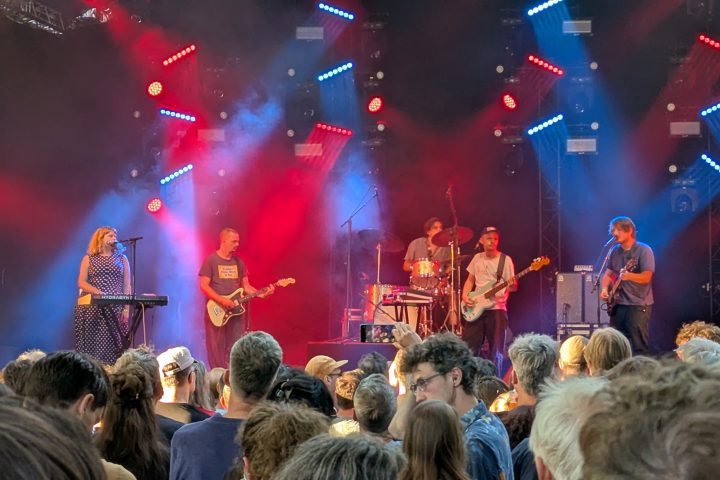
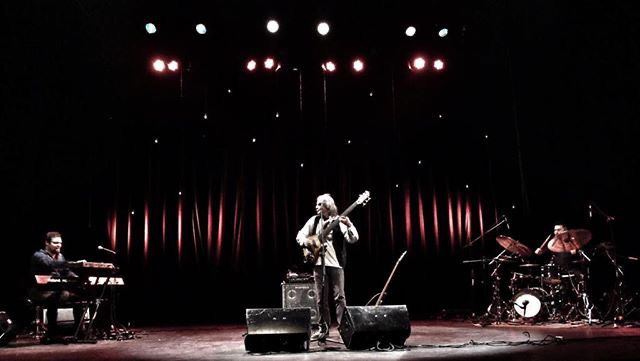
Thirty years of refusing to be a genre is exactly what makes this music hit different! Back home in Joburg the way kwaito resisted every box they tried to put it in , ‘is this house? is this hip-hop? is this South African music?’ , YES, all of it, none of it. Latin Alternative feels like a cousin in spirit. Music that moves too fast for labels to catch up with.
What’s interesting from a production standpoint is how Latin Alternative absorbed sonic elements from post-punk, shoegaze, and electronic music without losing rhythmic identity. Artists like Café Tacvba and Molotov weren’t just genre-blending aesthetically , they were engineering specific textures and layering Spanish-language phonetics against very non-Latin production frameworks. The refusal to be defined is also a refusal to optimize for a single listening context, which is a genuinely unusual choice.