 Into The Music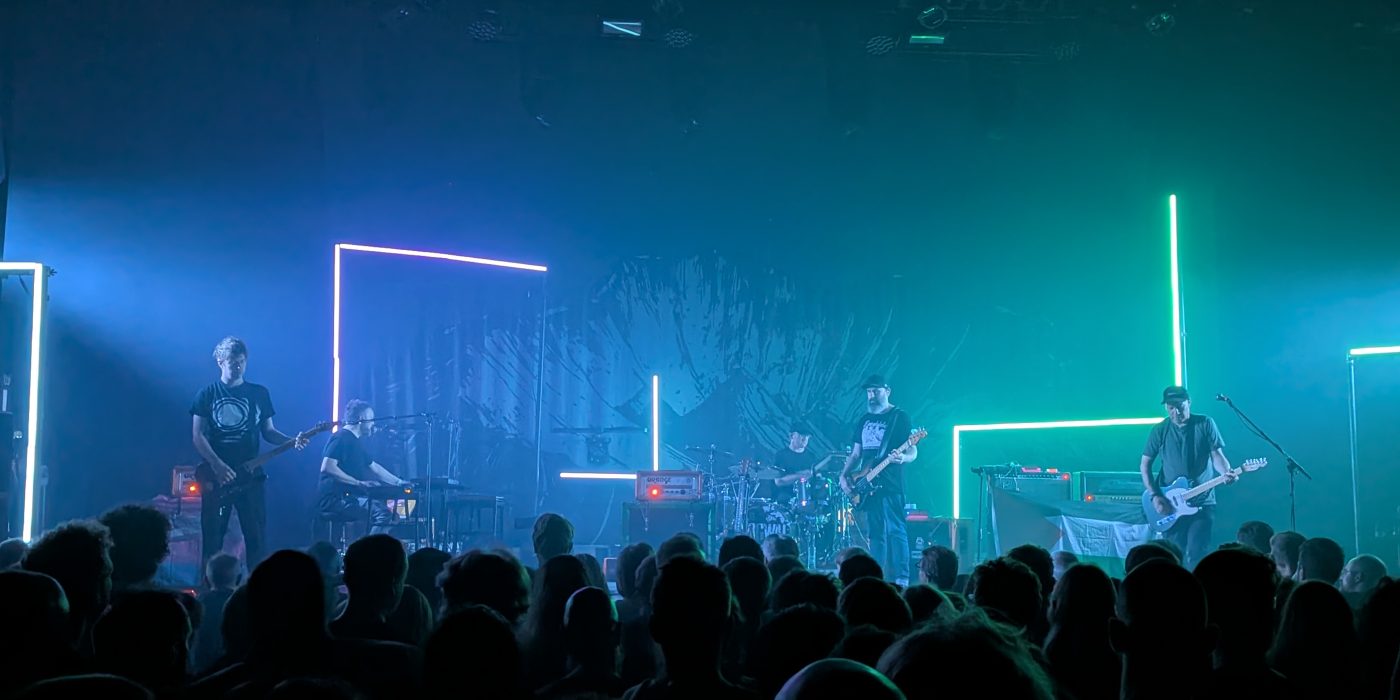
Post-rock is a terrible name for a great idea. The genre label implies a departure from something, a genre that exists in the aftermath of rock, which makes it sound like a footnote to a story that already concluded. In practice, post-rock has been continuously vital since the early 1990s, attracting new listeners and new bands in almost every decade since it arrived, and showing no particular signs of exhaustion.
The term is generally credited to critic Simon Reynolds, who used it to describe bands like Talk Talk and Bark Psychosis in the early 90s. What united these acts was not a sound so much as an approach: using rock instrumentation to produce music that worked by accumulation and atmosphere rather than verse-chorus dynamics. The guitar was still present but it was no longer the signal carrier for riffs and hooks. It became a texture, a layer in a larger compositional architecture that frequently owed more to minimalist classical music and ambient electronics than to anything in the rock tradition.
Talk Talk, in particular, made the transition from 80s synth-pop to something genuinely strange with Spirit of Eden in 1988 and Laughing Stock in 1991. These were records that required listening in a different mode than pop music typically demanded. There were no singles. There were no choruses to hold onto. There was instead a feeling that something was being built very slowly and with enormous care, and if you let it work on you rather than waiting for it to deliver what you expected, you arrived somewhere you had not anticipated.
Slint’s Spiderland, released in 1991, brought that same architecture to something rawer and more anxious. The Louisville record was quiet in ways that felt threatening and loud in ways that felt inevitable, and its influence on subsequent guitar music cannot be overstated. The quiet-loud dynamic that Slint developed, where extended periods of whispered guitar and spoken word would give way to eruptions of noise and distortion, became the defining structural move of post-rock in the 1990s and has never really stopped being used.
Tortoise in Chicago took the approach somewhere funkier and more improvisational, folding dub, jazz, and minimalism into a sound that had no precedent. Godspeed You! Black Emperor in Montreal built cinematic compositions of immense scale, often forty minutes long, that felt like musical responses to the state of the world rather than personal expression. Mogwai in Glasgow turned everything up and made the dynamic shifts feel physical, almost violent, in ways that were deeply pleasurable to anyone who had ever wanted music to hit them in the chest.
Explosions in the Sky and This Will Destroy You refined the emotional content of post-rock into something more nakedly moving, a move that brought the genre its largest audiences while also prompting accusations of sentimentality from critics who preferred the more austere approach. The argument is worth having. Both things are true: some post-rock goes for easy uplift, and some post-rock earns it through sheer patience and compositional intelligence. The best of it does the latter.
What keeps the genre alive in 2026 is that the underlying idea remains genuinely compelling. There is something that long, instrumental, compositionally ambitious music can do that almost nothing else can, which is create a kind of sustained attention that is rare in a culture organized around interruption and brevity. Post-rock asks you to stay with something for ten or twenty or forty minutes and trust that the payoff is coming. When it works, which is not always but often enough, the payoff is the experience of arriving somewhere you did not know you were headed.
The name is still bad. The music is still good. That has been the situation for thirty-five years and shows no sign of changing.

Terrible name, perfect music. The French have a word for this kind of contradiction but I’ve forgotten it.
What I find interesting is that ‘post-rock’ as a label actually functions like a production note rather than a genre tag , it tells you the instrumentation is familiar but the intent has been rerouted. Bands like Mono or Godspeed You! Black Emperor are essentially scoring emotional arcs without a narrator, which is closer to a film composer’s workflow than a rock band’s. The patience the article mentions isn’t stylistic laziness; it’s structured tension management.
Mogwai walked so every band that “builds slowly toward something enormous” could run. We don’t say thank you enough.
Coming from a production background, what post-rock solved , even if nobody called it that at the time , was the problem of dynamics in rock music. Most rock production by the 90s had compressed itself into a fairly narrow emotional range. Post-rock, almost by accident, rediscovered that a long quiet section earns the loud one. That principle is everywhere in contemporary production now, in genres that would never claim the influence.