 Into The Music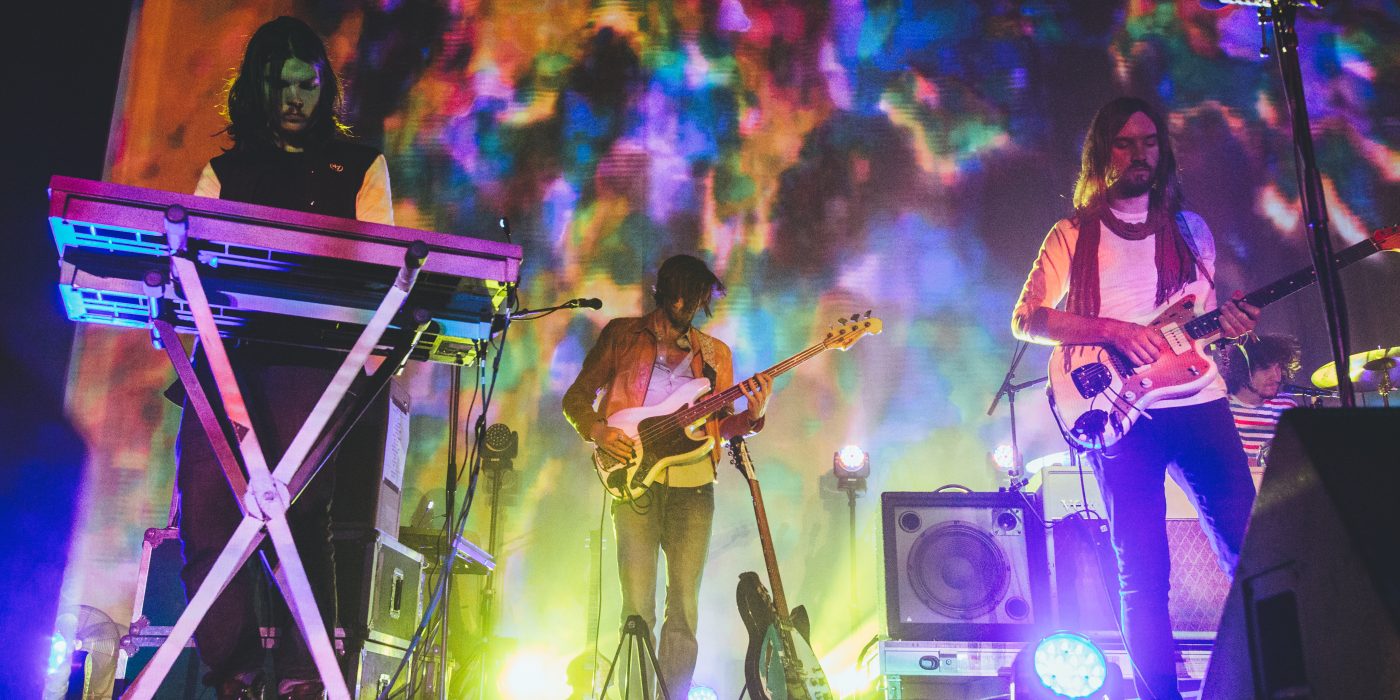
Psychedelic rock did not begin with drugs. It began with a question: what happens when you stop treating a song as a vehicle for the verse-chorus structure and start treating it as a space you can rearrange from the inside? The drugs arrived later and got most of the credit.
The genre emerged in the mid-1960s in the United States and the United Kingdom simultaneously, which tells you something about the shared conditions that produced it. British Invasion bands had pushed pop to a certain saturation point. American folk and blues had been absorbed into rock and roll and needed somewhere new to go. Producers and musicians started experimenting with recording techniques, tape manipulation, feedback, and unconventional arrangements, and found that the results opened up territory that the three-minute single format had never touched.
Jefferson Airplane and the Grateful Dead came out of the San Francisco scene, two different answers to the same question. Jefferson Airplane leaned harder into melody and political tension. The Dead pointed their arrangements toward improvisation and duration, building a live music culture that would define the jam band tradition for the next fifty years. The Byrds brought twelve-string jangle and folk-influenced lyricism that felt cosmic without being inaccessible. Each of these acts drew different audiences and pulled the genre in different directions before it had even named itself.
In Britain, the Beatles stopped touring and started treating the studio as an instrument. Revolver in 1966 and Sgt. Pepper’s in 1967 expanded what was considered possible for a pop group to attempt in recorded form. Jimi Hendrix arrived from the United States and redefined what an electric guitar could sound like in a live context. Pink Floyd came out of London’s underground scene with a theatrical and spatial approach to sound that owed as much to the avant-garde as it did to blues.
The genre hit its commercial and cultural peak around 1967 and 1968, then began to mutate. Some of it became hard rock and heavy metal as the psychedelic elements were stripped away and the volume was increased. Some of it went into progressive rock as bands pursued the extended composition and conceptual ambition that psychedelia had introduced. Some of it dissolved back into folk and country. The Summer of Love turned into the harder, darker reality of the late 1960s, and the music shifted with it.
What survived was the template rather than the style. Psychedelic rock established that rock music did not have to stay in one register, that songs could hold contradictions, that atmosphere was a legitimate compositional goal, and that the listener’s inner experience was a valid subject for music to address. Those ideas filtered into every subsequent genre that valued texture over structure.
The revival cycles have been consistent. In the 1990s, shoegaze bands like My Bloody Valentine and Spiritualized absorbed the psychedelic palette through feedback and distortion. Bands like Mercury Rev and Flaming Lips brought orchestral psychedelia into the mainstream without losing the weirdness. In the 2000s, the Black Keys and White Stripes used blues-psych as their foundation. Animal Collective rebuilt the genre’s collage aesthetics around new technology and new drugs.
The most significant recent inheritor is Kevin Parker of Tame Impala, an Australian multi-instrumentalist who has spent the last fifteen years making psychedelic music that sounds contemporary without being nostalgic. Parker’s production work on his own records and for artists including Lady Gaga and Kendrick Lamar has brought psychedelic production techniques into mainstream pop without requiring that pop shrink to accommodate them. That crossover is the genre’s current most visible expression.
Psychedelic rock in its pure historical form is not a dominant commercial force in 2026. But the ideas it generated have never been more embedded in what music is allowed to attempt. The question it started with, about what a song can be, never stopped being worth asking.
The article talks about psych rock asking what a song could be, and I think the Canadian underground has been quietly answering that question for forty years without getting enough credit for it. Kensington Market in the late 60s were doing full-blown psychedelic experimentation out of Toronto that rivaled anything coming out of San Francisco , and then you had groups like the Haunted, which almost nobody outside the country knows about. Even later, when psych had a revival, you had Elephant Stone out of Montreal doing something genuinely unique with sitar-influenced textures. The question the article poses , what is a song? , has been a Canadian obsession since before the genre had a name.
The framing here , that psychedelic rock began not with drugs but with a structural question , is more useful than most origin stories for the genre. What it correctly identifies is that the experimentation was about the listener’s relationship to time within a piece of music. Once you stop treating the verse-chorus structure as obligatory, you’re fundamentally changing what the listener is doing: they’re no longer following a map, they’re inside a space. That shift has meaningful cultural context , it emerged precisely when Western audiences were encountering Indian classical music through the raga form, which had been doing this for centuries. Ravi Shankar’s influence on Harrison and Lennon wasn’t just sonic. It was conceptual.
OK I came into this article a little skeptical because I mostly evaluate music by whether it makes my body want to respond , and psych rock is not always the most dance-friendly territory, let’s be honest. But then I started thinking about the parts that DO hit physically: that descending riff in “White Rabbit,” the way Santana’s “Soul Sacrifice” at Woodstock just refuses to stop building. There’s a trance element in the best psychedelic music that actually connects to what I love about Afro-Cuban rhythms. When a groove stops being about sections and starts being about surrender, that’s when I’m in.