 Into The Music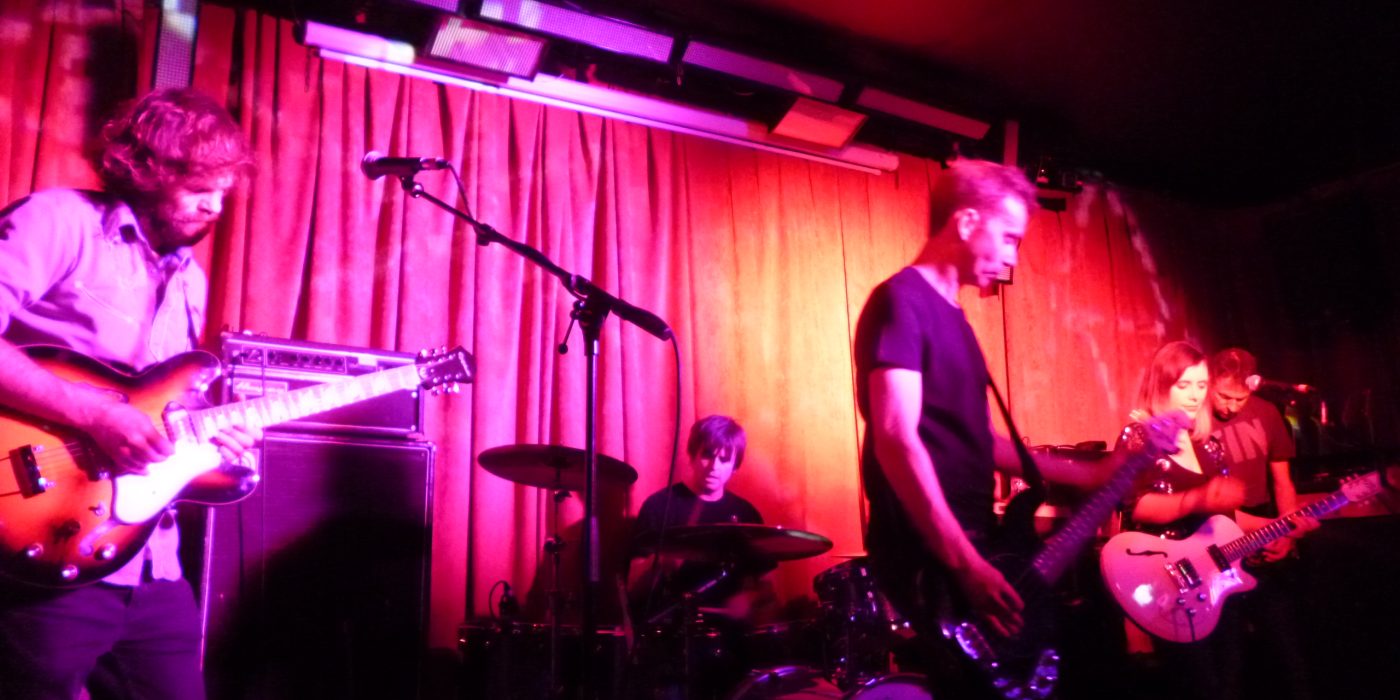
Shoegaze was supposed to be a joke. The name came from music press critics in the early 1990s who thought it was funny that these bands stood at the front of the stage staring at their pedals instead of engaging with the crowd. The joke turned out to be the wrong way to look at it. Staring at the floor was not awkwardness or indifference. It was concentration. These were people doing something technically complicated in service of something emotionally enormous.
The sound itself is not easy to describe without making it sound cold. Massive walls of guitar distortion, vocals buried in the mix, rhythm sections playing almost behind the beat. But what it actually feels like, when the right song hits at the right volume, is something closer to submersion than distance. The listener does not stand outside the sound. The sound comes and takes you with it.
My Bloody Valentine made the foundational record with Loveless in 1991, and the mythology around it is both deserved and slightly unhelpful. Kevin Shields spent so long on it, tortured the studio engineers so thoroughly, that the album has become as famous for its production as for its actual music. What gets lost in that story is how melodically rich Loveless is underneath all that noise. The songs are not hiding inside the distortion. They are being supported by it.
Slowdive, Ride, Lush, Chapterhouse: the Thames Valley scene that grew up around and alongside MBV was doing different things with the same vocabulary. Slowdive in particular had a quality that the louder acts sometimes lacked, a kind of oceanic sadness that felt less aggressive and more enveloping. Their 2017 reunion album was one of the better comeback records of the last decade, proof that the approach had not calcified.
The current shoegaze revival is real and it is not purely nostalgic. It is running through a surprising range of music, from acts who are straightforwardly working in the classic template to artists who are using the textural ideas as just one element in something more hybrid. Superheaven, Nothing, Gleemer, Lush’s own Miki Berenyi collaborating under the name Piroshka: these are not tribute bands. They are artists who heard something in the original approach that still has places to go.
There is also a connection between shoegaze and certain corners of modern pop and electronic music that does not always get acknowledged. The emphasis on texture over rhythm, on atmosphere as a primary expressive tool, is everywhere in contemporary production. Producers who cite Cocteau Twins as an influence are making music that does not necessarily sound like shoegaze but is downstream of the same set of priorities: emotional resonance first, formal clarity as optional.
What the original wave got right, and what the best current practitioners understand, is that noise and beauty are not opposites. The distortion in shoegaze is not aggressive. It is protective. It creates a space where feeling can exist at a scale that conventional pop dynamics do not allow. When a song from Loveless or Slowdive’s Souvlaki opens up into one of those massive guitar swells, what you are hearing is not sonic violence. It is sonic permission. Permission to feel something that large.
That is an offer that does not go out of date.

There is something about shoegaze that moves the way grief moves , not loud, not obvious, but it fills every room it enters until you forget there was ever silence before it. I came to it late, through a friend who played me Cocteau Twins on a long drive at night, and I felt something I couldn’t name. The idea that it went somewhere quieter rather than simply ending feels true to me. Some music doesn’t die. It becomes atmosphere.