 Into The Music
Shoegaze was never supposed to be a genre. The name was a joke, coined by a British music press that was annoyed at how intently the bands stared at their pedalboards during shows instead of engaging the crowd. My Bloody Valentine, Slowdive, Ride, Lush. They were not trying to start a movement. They were trying to disappear into sound.
Which is, as it turns out, one of the better ways to last.
The core shoegaze aesthetic arrived in the late 1980s and solidified in the early 90s. The technology made it possible: the Boss HM-2, the Electro-Harmonix Big Muff, the Roland JC-120 clean amp, and above all the Fender Jazzmaster and Jaguar, guitars whose tremolo systems could be manipulated to produce pitch shifts that are not quite of this world. Kevin Shields of My Bloody Valentine was the primary architect of what became known as the “glide guitar” technique, a method of rocking the tremolo arm mid-strum that generates a queasy, oceanic shimmer underneath conventional chords. Put that through enough reverb and delay and you stop hearing individual notes. You hear weather.
The vocals followed the same logic. In shoegaze, singers are rarely foregrounded. Bilinda Butcher and Kevin Shields sang on “Loveless,” the 1991 record that remains the genre’s definitive statement, and they did it as if they were instruments in the texture rather than voices in the foreground. You could not always hear the words. In shoegaze, that was a feature, not a limitation. The voice is another layer of the dream.
“Loveless” took two years and an estimated half a million pounds to record, an amount so extraordinary that it nearly bankrupted Creation Records. Alan McGee, the label’s founder, reportedly said it almost destroyed him and was absolutely worth it. The album got a perfect ten from Pitchfork a decade after its release, one of the first albums to receive that score, and it has not aged. It has deepened.
Slowdive, the other essential shoegaze act, took a different approach. Their records “Just for a Day” and “Souvlaki” are warmer, more melancholic. If My Bloody Valentine made noise that felt like touching an electric fence, Slowdive made noise that felt like falling asleep in the afternoon sun. Both are overwhelming in their own way. Neil Halstead’s voice was always more present than anything on “Loveless,” and the songs had more conventional shape. They broke up in 1995, came back in 2014, and have been quietly making new music since. Their 2017 self-titled return was as good as most people’s first albums.
The genre died, in the way genres do, when the British press moved on. Britpop arrived and wanted guitar music that was about something legible, something nationalistic, something you could shout along with. Blur and Oasis did not have pedalboards. They had attitude. Shoegaze got filed away.
It came back through the internet, as things do. Bedroom producers in the early 2010s discovered that guitar distortion and reverb were achievable on cheap equipment, and a new generation of bands arrived: Deafheaven, Alcest, Beach House, Nothing, and roughly ten thousand acts on Bandcamp that have never been heard outside of the people they sent the link to. The genre absorbed influence from black metal on one end and from ambient on the other, and both directions made sense. All three genres are about texture over melody. All three believe that volume is not aggression but transportation.
What has made shoegaze durable is that it is not fundamentally about nostalgia or reference. It is about a physical experience. The right shoegaze record at the right volume does something to the body, specifically to the brain, that is hard to achieve any other way. The sustained chord clusters blur the line between consonance and dissonance. The rhythm is there but subsumed. You stop tracking individual elements and start feeling the whole. That is a genuine emotional technology, and it does not expire.
The kids staring at their pedalboards were not disengaged. They were listening. It just looked like they were looking down.

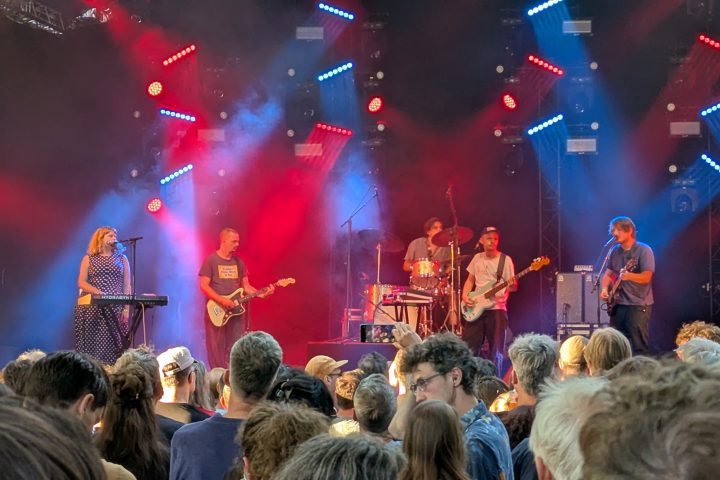
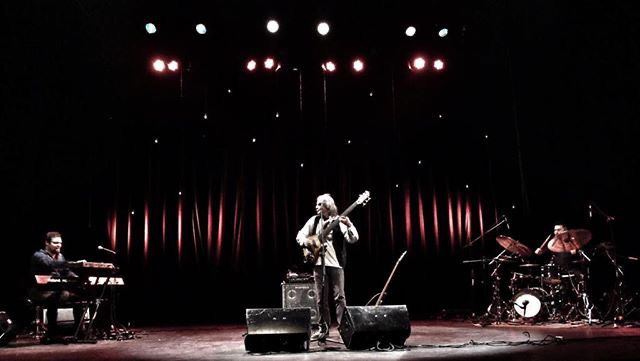
Now this is a fascinating history to trace. What strikes me about shoegaze is how it inverted everything that made early rock and roll work , Elvis and Little Richard were all about presence and projection, you looked UP at the performer and they looked OUT at you. Shoegaze bands turned that whole contract around completely. Kevin Shields staring at his pedalboard is the anti-Chuck Berry. And yet the emotional impact is just as overwhelming, maybe more so, because you’re not watching charisma , you’re being absorbed into texture. That’s a genuinely new thing in rock history.
A genre named after an insult that became a compliment. We have some experience with this in metal. Good article.
You know what shoegaze reminds me of? The way Caetano Veloso could take a simple melody and wrap it in so many layers of feeling that you don’t quite know where the song ends and you begin. Loveless does this!! It’s like being held by the music itself. Different worlds, same soul , music that wants to dissolve the distance between the listener and the sound.