 Into The Music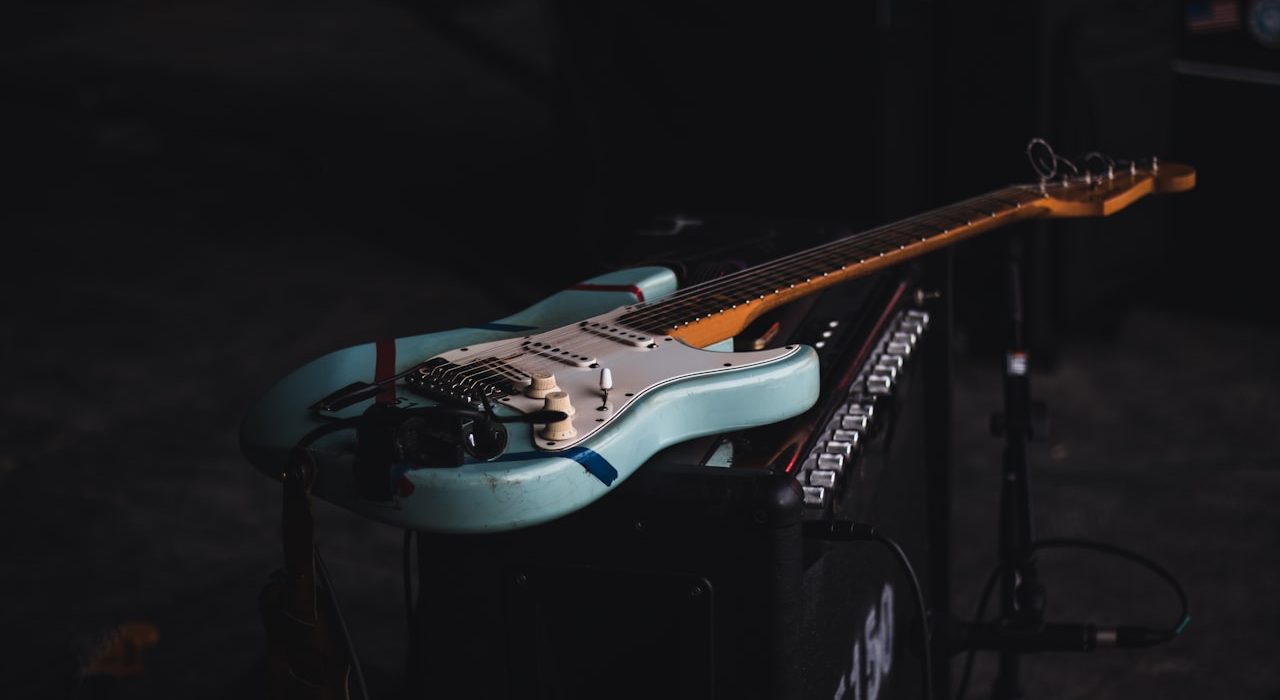
Shoegaze has one of the stranger histories in rock music, partly because the name itself was always an insult that got rehabilitated into a badge. The term was coined by the British music press in the early 1990s to mock bands who stood onstage staring at their effects pedals instead of engaging the audience. It was not a compliment. It became, in the decades since, a descriptor that carries genuine weight, a way of saying something specific and true about a particular approach to making music with guitars.
The approach, in its simplest form, is this: treat the guitar less as a melodic instrument and more as a weather system. Use reverb and chorus and distortion not to color individual notes but to create an atmosphere that the vocals sit inside, often half-buried in the mix, where they function more as texture than as lyric delivery. Let everything bloom. Let it wash. Let it be loud in a way that is also immersive.
My Bloody Valentine’s Loveless, released in 1991, is the record that most people use as the genre’s north star, and the comparison holds because Kevin Shields built something on that album that most people with unlimited studio time and a full complement of gear still cannot fully replicate. The guitar tones on “Only Shallow” do not sound like guitars so much as they sound like the color white, if white were somehow both aggressive and enveloping. The tremolo picking technique Shields used on much of the record involves a specific way of applying vibrato while also using the whammy bar, and it produces a pitch that is constantly in motion without quite going out of tune. It remains one of the most distinctive sounds in recorded music.
But shoegaze was never just one band or one record. Slowdive, Ride, Lush, Chapterhouse, and Pale Saints were all working in adjacent territories simultaneously, and the variety among them is often underappreciated. Slowdive leaned harder into the ambient end, with guitars that dissolved into actual drone at times. Ride was more aggressive, more melodically assertive, and their debut Nowhere has a directness that sits in interesting contrast to the dreamy reputation the genre carries. Lush brought a pop sensibility that the genre’s more abstract practitioners sometimes lacked.
The genre collapsed commercially in the mid-1990s when Britpop arrived with its more muscular, more extroverted approach. Oasis and Blur did not have much patience for introspection or atmosphere, and neither did the music press that had been instrumental in building shoegaze’s reputation and then got bored. Most of the core bands broke up or went on indefinite hiatus by the mid-to-late 1990s.
What happened next is more interesting than the original story. Shoegaze did not die. It went underground and migrated, and the American indie scene of the 2000s absorbed it so thoroughly that the influence became invisible. The expansive guitar textures in early Interpol records. The production on certain Beach House albums. The approach that Grouper has been developing for two decades, where the guitar is essentially a medium for creating light and shadow rather than notes. All of this has roots in the shoegaze tradition, even when the artists themselves might not use the word.
The official reunion era began roughly around 2014, when My Bloody Valentine returned with m b v after more than two decades, and Slowdive re-formed and eventually released Slowdive in 2017, a self-titled comeback album that turned out to be better than most reunion records have any right to be. Ride came back too. The original bands are still out there, still playing, and the audiences showing up are not exclusively composed of people who were there the first time around.
The newer generation of artists working in the shoegaze tradition has expanded the sonic vocabulary considerably. Black Midi is not a shoegaze band, but they share a willingness to treat dissonance and density as compositional tools. Nothing makes shoegaze-adjacent music with harder edges. Deafheaven brought the aesthetic into proximity with black metal in a way that should not have worked and undeniably does. Cocteau Twins, who were always adjacent to shoegaze rather than squarely in it, are increasingly understood as central to the lineage.
What makes shoegaze durable, decades past its commercial peak, is that it solved a specific problem in an interesting way. The problem was how to make music that was simultaneously overwhelming and intimate, that could fill a room and still feel like it was speaking directly to one person. The wall of sound, at high enough volume, becomes personal. It surrounds you rather than confronting you. Standing inside a good shoegaze record is not unlike standing inside weather. And there is always an audience for that.

I’ll push back slightly on the framing here , calling shoegaze a “guitar pedal” genre undersells the compositional architecture behind the best records. Loveless isn’t interesting because of the Fender Jazzmaster through a Univox; it’s interesting because Shields understood how to build harmonic density the way a prog arranger would, layering frequencies so you can’t locate their source. The pedals were just the delivery mechanism. The genre’s problem, frankly, is that too many imitators fetishized the tools and forgot about the architecture underneath.
The idea that shoegaze “turned guitar pedals into weather systems” is evocative, but it’s worth noting that the sonic immersion this genre became known for has deep roots in non-Western music traditions , West African highlife guitarists were building walls of texture and interlocking rhythm long before British bands discovered the Boss HM-2. The difference is that highlife’s complexity was communal and dance-oriented, while shoegaze turned inward. Both are valid approaches to sonic density; the genealogy is just rarely acknowledged.
Esther, genuinely interesting point , but I’d love to know more about the specific signal processing side of those immersive West African traditions you’re referencing. Because the shoegaze sound relies so heavily on specific pedal chains: the Digitech Whammy, the Proco RAT, the Roland Space Echo on a feedback loop. I don’t doubt the conceptual kinship exists, but I’m curious what the actual sonic tools were in the traditions you’re thinking of and whether there’s a technical conversation to be had there as well as a philosophical one.
Obligatory Canadian content note: Hum were technically American but the Canadian scene absorbed shoegaze in a way that gets basically zero credit in these histories. Jale out of Halifax, Change of Heart doing weird distorted things in Toronto , there was a whole ecosystem here processing these sounds in real time. Also completely forgotten: Sianspheric from Halifax, who were making genuinely extraordinary layered guitar records in the mid-90s that would fit right in a shoegaze canon if anyone outside Nova Scotia had heard them. The “weather systems” metaphor is apt, though , those records do feel climatic.