 Into The Music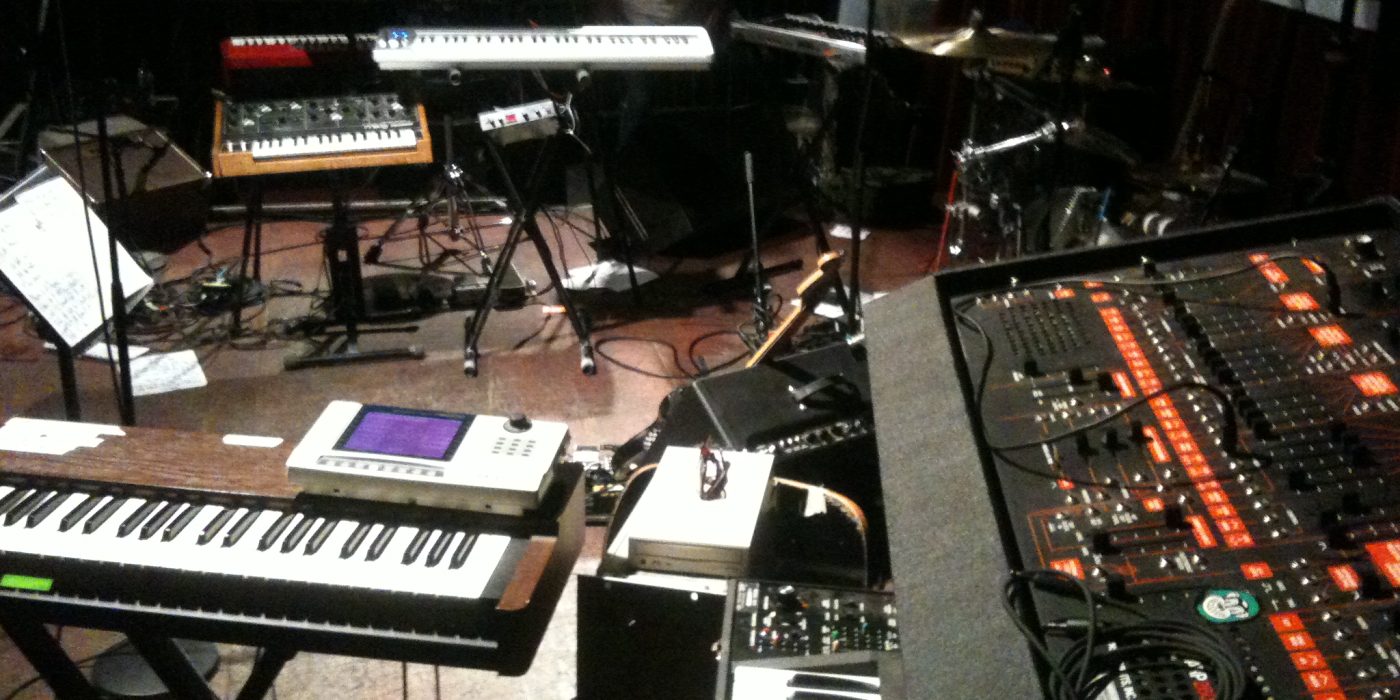
When Vince Clarke, Neil Arthur, and Benge announced their Doublespeak project this week, the coverage framed it as a reunion of sorts, veterans of the British synth-pop era coming together for a mutual tribute project. That framing is accurate but incomplete. What it misses is that synth-pop never actually went anywhere, and the artists who came out of that era have spent 40 years proving it.
Synth-pop arrived with a specific cultural context. It was the late 1970s and early 1980s. Guitar rock had canonized itself into something comfortable and predictable. Synthesizers were still relatively expensive and still carried the stigma of being fake instruments, which for certain people was part of the appeal. Bands like Depeche Mode, Soft Cell, Human League, Yazoo, Erasure, and OMD built their entire identities around the idea that synthetic sound was not a lesser substitute for real instruments. It was a different thing entirely. They were right.
What the Genre Actually Was
The critical reception of synth-pop has always been slightly condescending, as if the genre’s commercial success and melodic directness were evidence of some kind of artistic compromise. This misreads the history badly. The best synth-pop records are genuinely strange objects. Depeche Mode’s Construction Time Again is a record about factory noise and political anxiety made by three young men from Basildon, Essex. Soft Cell’s Non-Stop Erotic Cabaret is a document of sleazy brilliance that holds up better than most of what was called serious music at the time. The Human League’s Dare remains one of the most perfectly engineered pop albums ever made, and it was achieved through genuinely unconventional means.
Clarke himself is an instructive case. He wrote “Just Can’t Get Enough” for Depeche Mode before leaving to form Yazoo with Alison Moyet, then Erasure with Andy Bell. His catalog of pop songwriting is extraordinary by any standard. But his influences are deeply strange: Kraftwerk, the Velvet Underground, the Beach Boys, hymns. None of that is obvious in the radio-friendly surfaces. It is all audible underneath.
The Covers Tradition
One of synth-pop’s quiet contributions to music culture is the covers tradition. The Doublespeak tracklist, which includes songs by ABBA, the Carpenters, Young Marble Giants, and Fad Gadget, is a direct continuation of something that has always been central to how electronic musicians engage with the past. Erasure covered ABBA. Soft Cell made “Tainted Love” the definitive version of a 1964 Northern Soul track. Pet Shop Boys have built a second career from radical reinterpretations.
The logic of the synth-pop cover is that the arrangement is not sacred. A melody is a melody. The Doublespeak project takes this further: they are covering songs that the three members feel shaped them, and the act of covering is itself a kind of autobiography. You learn something about a songwriter by watching what they choose to play.
The Current Moment
Synth-pop as an explicit genre label has somewhat dissolved, but its DNA is everywhere in 2026. The hyper-produced pop of mainstream artists owes direct debts to the production methods Clarke and his contemporaries pioneered. Artists working in ambient, club, and experimental electronic music trace back to the same moment. Even the current generation of bedroom producers, making music on laptops with software synthesizers that would have seemed miraculous to the original synth-pop generation, are operating within a tradition that band made viable.
What is genuinely interesting about a project like Doublespeak is that it is not nostalgic in the sentimental sense. It is a conversation between people who still find this music alive and relevant. Clarke is not working in the past. He is working with the past, which is different.
The synthesizer is still not a lesser instrument. Some people still haven’t gotten the memo.
The motorik beat, the layered synths, the sheer repetition – this is classic Krautrock vibes. Doublespeak feels like a direct line back to the early 70s. Just when you think the genre has faded, it reemerges to remind us of its hypnotic power.
This track has a real Kraftwerk vibe to it – the motorik beat, the layers of synth. But there’s a soulfulness here that’s missing from a lot of modern synth-pop. Doublespeak feels like a direct line back to the early Krautrock pioneers like Can or Neu!. Just when I think the genre has lost its way, something like this comes along and reminds me why I fell in love with it in the first place.
Terrence!! The soulfulness you’re describing is real but I’d push that further , gqom and kwaito have been doing that same thing for decades, this kind of motorik pulse underneath something deeply human and emotionally direct. When I hear Doublespeak I hear that same tension. Maybe the connection isn’t Kraftwerk → synth-pop, maybe it’s everywhere the body meets the machine at once. Township dancefloors figured this out a long time ago.
I hear strong commercial potential in this track. The motorik rhythm and synth pad textures have a timeless quality that could easily cross over to more mainstream electronic and dance playlists. With the right promotion and playlist placement, I could see Doublespeak making some real waves in the streaming era.
This track from Doublespeak has an undeniably Krautrock flavor, with its motorik rhythms and layers of analog synths. But there’s also a distinctly African influence that gives it a more soulful, hypnotic quality. I hear echoes of the repetitive, trance-inducing grooves of highlife and chimurenga music, fused with the mechanical precision of the Kosmische Musik pioneers. It’s a sound that bridges the Afro-German musical exchange that has been happening since the 1970s, when musicians like Can and Fela Kuti were exploring common ground. Doublespeak taps into that rich heritage, creating something that feels both nostalgic and refreshingly modern. It’s music that rewards deep listening, pulling you into its rhythmic undertow. A welcome return for these veterans of the synth-pop era.
The title is correct. Synth-pop didn’t disappear , it dissolved into the infrastructure. Clarke’s work has always been more architecture than nostalgia.
I keep coming back to what happens to the voice in all of this. Synth-pop carries this specific kind of longing that only works when the human element , breath, phrasing, the tiny catch in the throat , is allowed to stay fragile against all that clean electronic sound. When it’s done right it breaks something open. When the vocal gets processed into a texture, you lose the whole point.