 Into The Music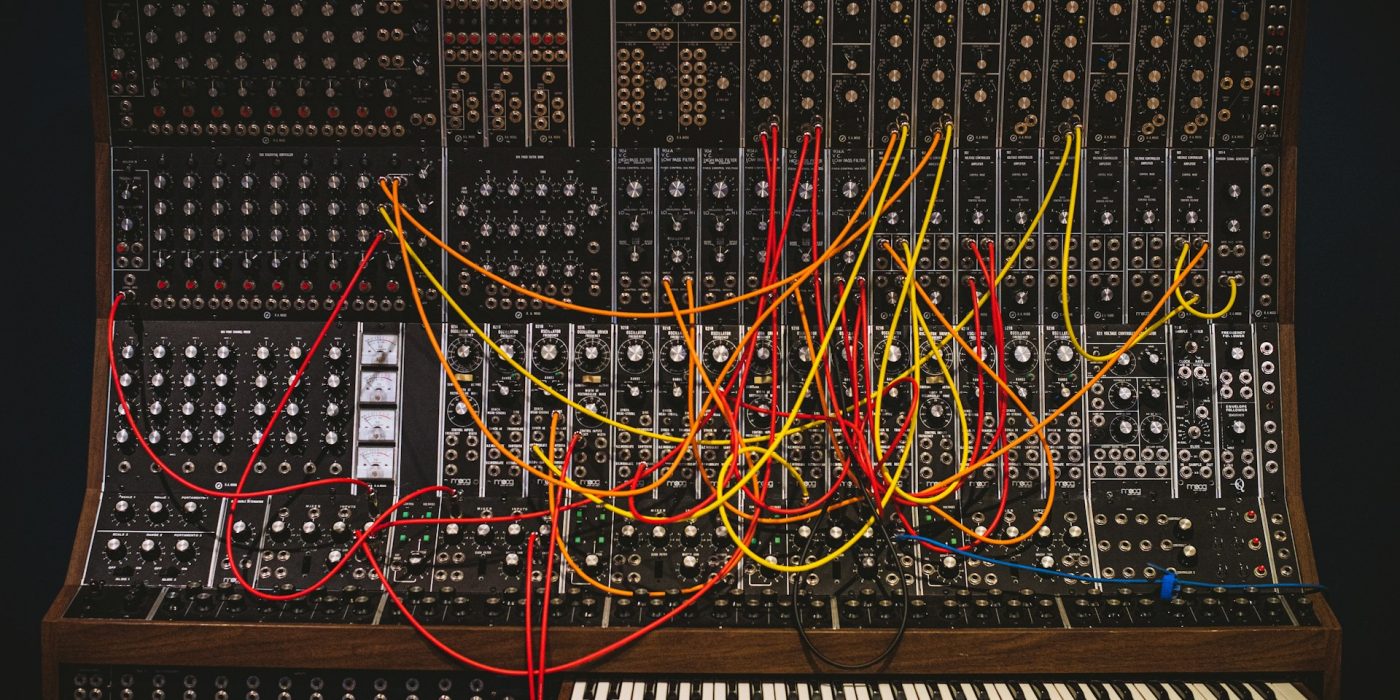
Synth-pop arrived with the 1980s and never really left. It outlasted the decade it defined, shed several of its worst habits, kept the best ones, and quietly became one of the most durable frameworks in all of popular music. The artists making it today are not reviving something dead. They are building on something that never stopped being useful.
The roots stretch back further than the 80s, though. Kraftwerk in the 1970s laid the philosophical groundwork, treating the synthesizer as an instrument with its own vocabulary rather than an imitation of something organic. Giorgio Moroder’s production work, particularly on Donna Summer’s records, showed how electronic music could function within mainstream pop structures without losing its mechanical identity. By the time the early 80s arrived, a generation of British bands had absorbed these influences and were ready to make them commercial.
Depeche Mode, New Order, the Human League, Gary Numan, Soft Cell, Erasure. These are the names that get mentioned first, and they deserve the mention. But synth-pop was never a tightly unified movement. It was a set of shared tools applied toward very different ends. New Order came from the wreckage of post-punk. The Human League had a hit with “Don’t You Want Me” that sounded like a pop song made by people who had never quite decided if pop was the enemy or the goal. Depeche Mode started out cheerful and became one of the gloomiest bands of the late 20th century, without ever abandoning the format.
The synthesizer itself is the key. It can be cold or warm, minimal or maximal, clinical or ecstatic. Synth-pop uses this flexibility to its advantage. The genre can accommodate Giorgio Moroder’s disco-adjacent production, the icy detachment of early Kraftwerk, the anthemic uplift of classic New Order, and the intimate confessionalism of someone like Robyn, whose new album this year continues to demonstrate what the format is capable of in the right hands.
The 90s were hard for synth-pop’s reputation. Grunge made synthesizers seem soft and soft seemed wrong. But the music survived in different forms. Electronic music absorbed many of its practitioners. Trance and house kept the synthesizer central. And when the 2000s brought indie bands back to keyboards, synth-pop’s vocabulary was waiting.
The current state of the genre is genuinely interesting. The past decade has produced a wave of artists who are not interested in period accuracy. They are using synthesizers as synthesizers have always been used, to make music that sounds like the present rather than a recreation of the past. The chillwave movement, however briefly it cohered, pointed toward this. So did the more electronic corners of bedroom pop. So does the work of artists like Caroline Polachek, whose records draw on synth-pop’s emotional language while refusing its retro trappings.
There is also a renewed appreciation for the original era that is less about nostalgia than about craft. Depeche Mode’s back catalog has been reassessed upward over the past decade. Soft Cell’s Marc Almond has aged into a figure of considerable respect. The Human League still tours and people who were not alive when “Don’t You Want Me” was a hit are discovering it and finding it holds up completely.
Synth-pop works because it is honest about what it is. It does not pretend to be organic. It does not apologize for being mechanical. It found beauty in the machine at a time when that seemed like a strange place to look, and it has been proving the point ever since.
Can we talk about the hardware for a second? Because “the sound that made the machine feel human” is interesting phrasing when you consider that early synth-pop was built on instruments that were actively fighting their operators. The Minimoog, the Roland SH-101, the Juno-60 , none of these were easy to coax into warmth. The reason acts like Depeche Mode and New Order sounded the way they did is partly because they were working against the clinical precision of the gear, not with it. The humanity in synth-pop was literally squeezed out of machines that weren’t designed to be tender. That tension is what made it interesting.
What synth-pop did , and what this article captures beautifully , is give emotional permission to people who might not have accessed it through more traditional music. There’s something about the way the synthesizer sits underneath a vocal, almost like it’s holding the singer up, that I find genuinely therapeutic. I use ambient electronic music regularly in my practice with clients who struggle to connect to more organic sounds. The “machine feeling human” isn’t a paradox for them , it’s the whole point. Something that was made, not born, can still understand you.
I grew up on ska and third-wave punk and somehow synth-pop was always the genre I was supposed to be too cool for, and yet every time I hear Blue Monday I forget everything I believe about myself musically. It’s embarrassing. My identity is a lie apparently.
There is something almost unbearable about the way certain synth-pop songs carry emotion , that precision, that control, and underneath it something that sounds like longing that has nowhere to go. It reminds me of how the most restrained flamenco performers are often the most devastating. The machine trying to feel human is its own kind of duende.