 Into The Music
Tate McRae didn’t show up to the Junos. She didn’t need to. The hardware came to her anyway.
The 22-year-old Calgary-born pop star swept the 55th annual Juno Awards gala on Saturday, March 28, taking home four of the night’s biggest prizes: Album of the Year, Artist of the Year, Single of the Year for “Sports Car,” and Pop Album of the Year, all for So Close To What. It is, by any measure, a dominant performance. And yet McRae was absent from the ceremony, leaving industry insiders to collect on her behalf while the room presumably tried to figure out what to make of a winner who seems perpetually elsewhere.
That’s not a criticism. It’s actually kind of the point.
McRae’s whole arc has been one of relentless forward motion. She came up as a dancer, pivoted to pop before she was old enough to drive, and has spent the last three years building a fanbase that operates on parasocial loyalty and virally choreographed singles. So Close To What, her third studio album, is the record that made the industry take her seriously in the way that matters to the Junos, which is to say: commercially, critically, and in terms of cultural reach. Four wins at a single gala is the kind of sweep that usually requires either decades of goodwill or a genuinely undeniable year. McRae had the latter.
“Sports Car” in particular demonstrated something that a lot of pop acts never quite manage: a song that sounds effortless but clearly wasn’t. The production leans into a certain cool-girl bravado that McRae has been fine-tuning since “You Broke Me First” went everywhere in 2020. By the time “Sports Car” hit, she’d figured out how to make that toughness feel playful rather than defensive. That’s harder than it sounds.
The Junos, for their part, made the right call. Canadian music has a tendency to produce artists who get eaten alive by American expectations and then return home having lost the thing that made them interesting. McRae is at the stage of her career where the American market is real, the global reach is real, and the question of what she does next with all of it is genuinely open. Four Junos is both a recognition of what she’s already done and a kind of institutional bet that she’s going somewhere worth following.
Whether she agrees with that framing is another matter. The fact that she wasn’t there suggests she’s already moving on to whatever comes next, which is either admirable efficiency or a polite form of “this category is already behind me.” Probably both. The Junos will be fine either way. They got a winner worth talking about. McRae got the trophies without interrupting her schedule.
The telecast on Sunday, March 29 will include the TD Juno Fan Choice Award, where both McRae and Justin Bieber are in contention. If she wins that one too, from a distance, the story writes itself.


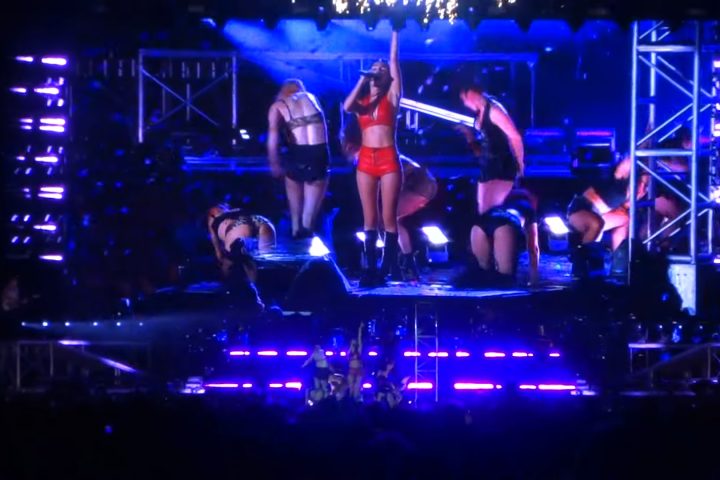
I confess I was not familiar with Tate McRae before reading this, which is perhaps a symptom of my age, but four Juno Awards at 22 is not something one dismisses. I went and listened and I understand now why a room full of voters made that decision. What impresses me most, from a teacher’s perspective, is the control in her voice , the restraint she shows when the melody wants to push into excess. That is not instinct at 22. That is discipline, and discipline is something you have to work for.
Walter, your instinct to go listen rather than dismiss based on age is the correct one. The four awards are not really the point , award shows measure commercial presence, not quality. What’s more interesting is whether the work holds up without the apparatus. I haven’t formed a strong opinion yet.
I’ll be honest, the Junos have never had the international profile they deserve , back in the early days when Gordon Lightfoot and Anne Murray were sweeping the early awards, nobody outside Canada was paying attention either, and those are legitimate legends. Tate McRae winning four feels like a similar inflection point where Canada is producing a pop star who might finally make people take the Junos seriously as a leading indicator rather than a footnote. Whether she shows up or not is beside the point.