 Into The Music
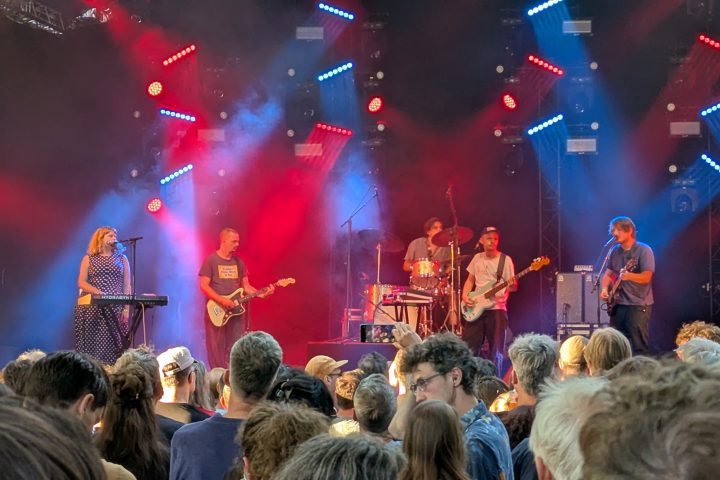
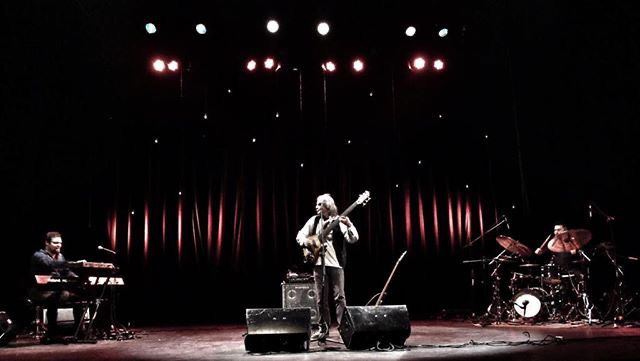
Americana has always resisted easy definition. It is not country, exactly, though country runs through it. It is not folk, though folk is in the bones. It is not rock, though plenty of Americana bands hit harder than anything on a classic rock playlist. The genre exists as a kind of permission slip, a space where artists can pull from the full range of American roots music without having to explain themselves to any one radio format.
Right now, something interesting is happening in that space. The revival is not the same as the last one.
Kacey Musgraves is the clearest signal. Her upcoming sixth album, Middle of Nowhere, due May 1, is drawing on Texas roots in ways that her earlier work gestured at but never fully committed to. The first single, Dry Spell, incorporates Western swing and bluegrass and traditional Mexican music alongside the country-pop foundation she built her mainstream career on. The guest list includes Willie Nelson, Miranda Lambert, Billy Strings, and Gregory Alan Isakov, which is basically a shortlist of everyone currently doing interesting things in the broader roots space.
What Musgraves represents in 2026 is different from what she represented in 2013 when Same Trailer Different Park came out. Then she was a Nashville outsider making pointed commentary from inside a format that was not quite ready for her. Now she is operating from a position of enough commercial success and critical respect that she can go wherever she wants, and she is choosing to go deeper into the roots rather than further away from them.
She is not alone. The past 18 months have seen a cluster of records that collectively suggest that Americana is in one of its more creatively alive phases. Waxahatchee released Tiger’s Blood last year, a record that felt like the culmination of years of work and landed as one of the best things in the broader country-adjacent space. Hurray for the Riff Raff continues to make records that take the genre’s sonic toolkit and use it to say things the format rarely bothers with. Mdou Moctar is technically desert blues but occupies the same appetite for roots that do not apologize for themselves.
Part of what is driving the current moment is a straightforward reaction to the decade just past. When everything went maximalist and electronic, when production became the point and acoustic instruments got treated as vintage accessories, some artists started going the other way. Not as a retro gesture, but as a genuine choice about where the most interesting work was happening.
The other factor is streaming. Americana has historically been a radio non-starter, the kind of music that required touring and word of mouth to build an audience. Streaming broke that constraint. If someone discovers Waxahatchee or Gillian Welch or Watchhouse through an algorithm-generated playlist, the record label format stops mattering entirely. The music gets heard on its own terms.
What defines the best of the current Americana moment is that it is not nostalgic. The artists making the most interesting work in this space are not trying to recreate 1973. They are using the vocabulary of roots music to talk about 2026, about displacement and economic pressure and the particular loneliness of being American right now. The pedal steel cries and the fiddle aches and the lyrics are about things happening today.
That combination, old sounds carrying new weight, is what Americana has always done best when it is working. Right now, it is working.
Not my genre but I respect any sound that knows exactly what it is. That ‘different this time’ framing is what’s got me curious.
Okay but does the new Americana have RHYTHM?? Because this is my one issue with the genre , I can appreciate the craft and the storytelling, I genuinely can, but my body wants to move and half these songs are asking me to sit still and feel feelings. Give me some soca-influenced Americana crossover and I will be the biggest convert you’ve ever seen. The bones are there. Someone just needs to bring the riddim.