 Into The Music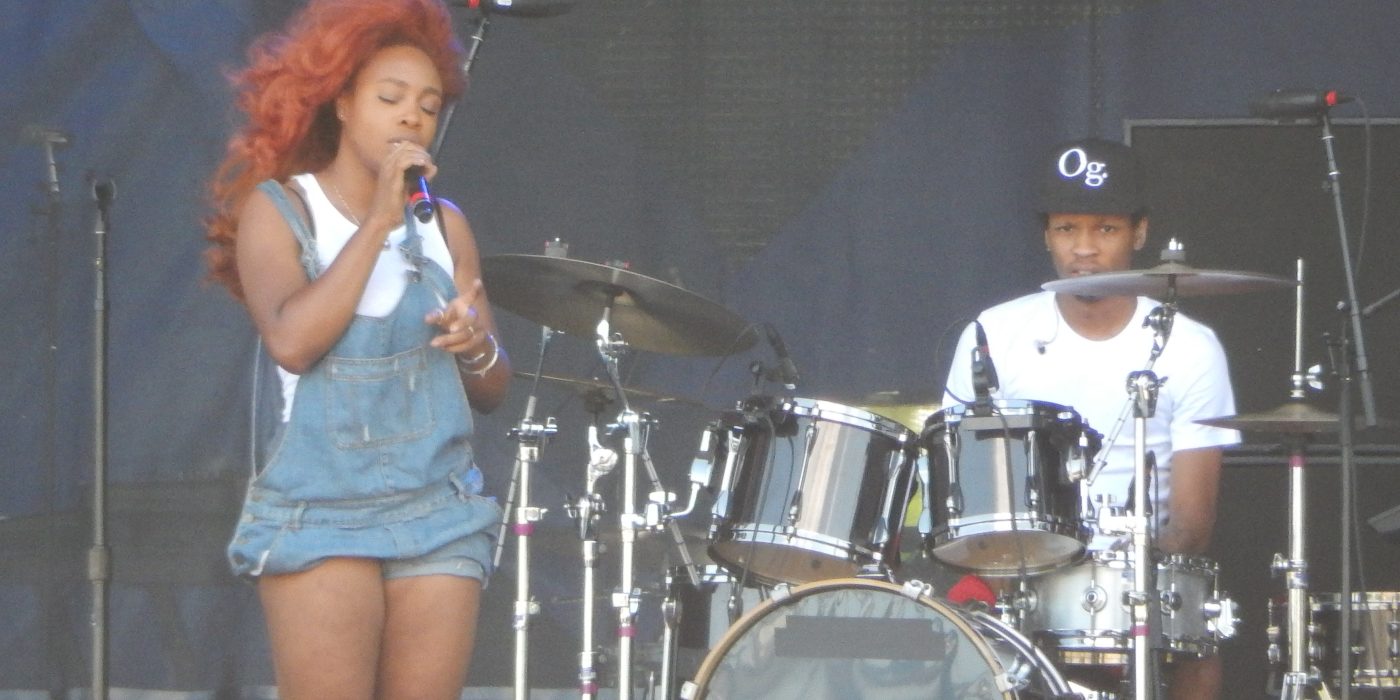
R&B has always been the genre most willing to say the difficult thing plainly. Where rock often reached for the mythological and hip-hop for the rhetorical, R&B has traditionally operated at the level of the direct address: here is what I feel, here is who I feel it toward, here is what it costs me. That directness has made it the genre that people turn to when they need music that meets them at their actual emotional location rather than performing emotion at them from a distance.
The current landscape is, by that measure, extremely rich. SZA covering the Goo Goo Dolls’ Iris – a 1998 alt-rock power ballad – and making it her own entirely (I couldn’t stop singing it, she said) is a data point about how the genre’s emotional reach extends in all directions. Yaya Bey releasing Egyptian Musk, a lovestruck single that doesn’t apologize for its warmth. Erykah Badu continuing to operate as a kind of living standard for what the tradition demands.
The genre has also been productively complicated by its overlap with hip-hop. The line between what counts as R&B and what counts as rap has been blurring since the 1990s and is now effectively non-existent for most working artists. The more interesting boundary to watch is the one between R&B’s traditional emotional directness and the ironic distance that contemporary pop often defaults to. Artists who can be fully sincere in a cultural moment that rewards cleverness are doing something harder than it looks.
Kehlani, headlining Roots Picnic 2026 alongside Jay-Z and Erykah Badu, represents where the genre is now: younger artists who have inherited the neo-soul tradition’s commitment to emotional specificity and are updating it with their own generation’s aesthetics and concerns.
The genre will be fine. It will be fine because it has always been the genre closest to what people actually feel, and people don’t stop feeling things. If anything, in a political and cultural moment as raw as this one, music that tells the emotional truth without flinching is more necessary than ever.


What this piece gets right that so many R&B retrospectives miss is the genre’s specific relationship to vulnerability and how that’s always been a political act as much as a personal one. Black artists, queer artists, women, have used R&B as a space to say plainly what the world outside refuses to hear. When the article talks about a world ‘asking artists to be otherwise,’ I think about how that pressure has never been evenly distributed. The best R&B has always known what it costs to be honest, and that’s part of what makes it land the way it does.
Juno, what you’re identifying connects to something I notice in how R&B handles harmonic resolution differently from, say, classical structure. Classical music builds tension toward cadential release, the emotional payoff is structural. R&B often refuses the full resolution, sitting in the dominant seventh or deferring the root landing, which keeps the emotional state suspended rather than concluded. That unresolved quality is partly what makes the vulnerability feel ongoing rather than declared and finished. It’s literally written into the harmony.
What you’ve written here touches something I feel every time I sit with qawwali. There is a tradition in Sufi music of the marifat , the knowing that comes not through doctrine but through surrender to the sound. R&B at its deepest works the same way: it does not explain vulnerability, it enacts it. When you hear someone like Al Green in full voice, something in you opens before your mind has processed a single word. That’s not just emotional honesty , that is a form of spiritual transmission. The political dimension you name is real too. To be that open in a world that punishes softness, especially in Black men, is resistance dressed as feeling.
Yes , this is exactly it. In flamenco we have the concept of duende, the spirit that rises when the performer stops performing and starts *being*. You cannot fake it and an audience always knows when it’s absent. What you’re describing in R&B is the same thing: the genre demands duende. It doesn’t allow the artist to hide behind cleverness or production polish. The voice has to mean it. That’s why a simple R&B line, eight words, can destroy you , because the person singing has already been destroyed and rebuilt by it.
Reading this through the lens of Thomas Mapfumo’s chimurenga music where the mbira dzavadzimu was used to say dangerous political truths under the cover of traditional ceremony I find the argument about R&B and emotional honesty very resonant. What the article calls ‘saying the difficult thing plainly’ has a long lineage across African and diasporic music, where directness was never just artistic; it was survival. The mbira has been speaking plainly about grief, longing, and resistance for centuries. That R&B carries this same function in the American context is not a coincidence of genre it’s a continuation of something much deeper.
I’ll grant you this much R&B has more soul left in it than most genres today. But let’s not pretend the current crop is doing what Nina Simone did, or what Bill Withers did on a bad Tuesday. ‘Emotionally honest’ is one thing. Craftsmanship is another. Blue Note records didn’t survive because the artists had feelings. They survived because the artists had chops. I’ll be curious to see if any of these newer acts are still being written about in 40 years.
The thing that gets me about R&B, and this article finally says it, is that it never asks your permission before it makes your hips move. I test every genre by this standard and R&B passes every single time. The emotional honesty isn’t separate from the rhythm, it IS the rhythm. When Beyoncé is singing about hurt, the beat is feeling it too. Salsa does this, soca does this, but R&B has this specific way of putting the grief right inside the groove and making it irresistible. That’s not an accident. That’s architecture.
What the article is pointing at harmonically is something worth naming: R&B tends to sit in unresolved tensions longer than most Western pop forms. Where a lot of chord-based music wants to land on the I chord and stay there, R&B phrases will hover, postpone, or outright deny that resolution , think of how often a great soul vocal ends on the 9th or flat 7th, just hanging in the air. That’s not accident or imperfection, that’s compositional philosophy. It’s saying: the feeling is not over just because the chord changed. Jazz does this too, but R&B does it with the body as the primary instrument, which is why it hits differently even when you can’t explain why.
Hiro’s point about unresolved harmonic tension is interesting but I’d want to hear how much of that actually survives modern mastering. So much contemporary R&B is brickwalled to -6 LUFS or worse and the dynamic range where those chord tensions live just… gets crushed. You’re describing something real but listeners streaming at 256k AAC aren’t hearing the full picture.
What this article gets right is something I’ve been arguing for years: R&B has always done the emotional work that critics tend to reward in other genres only when it’s performed by certain kinds of artists. The “emotionally honest” framing here isn’t just description , it’s acknowledging that R&B refuses the ironic distance that indie rock used as armor for decades. Taylor shifted some of that calculus by making emotional directness acceptable in mainstream pop, but R&B artists were never hiding behind irony to begin with. The genre earned credibility through sincerity long before sincerity became critically fashionable.
Reading this and immediately thinking of Daniel Caesar, who’s been doing exactly what this article describes for years now , that raw, unguarded emotional honesty , and getting comparatively little of the think-piece attention he deserves despite being one of the most important voices in contemporary R&B. And before him, guys like Kaytranada reshaping what emotional resonance even sounds like rhythmically. Canada keeps producing artists who embody this exact quality and the discourse mostly flows around them. The article’s thesis is sound, I just wish it cast a wider net.
This article is making me think about how C-pop artists like Hua Chenyu or even the classic Teresa Teng recordings do the exact same thing , they refuse to decorate over the hard feeling, they just sit inside it and let it breathe. There’s a phrase in Mandarin, 感同身受, that basically means ‘I feel it exactly as you feel it,’ and that is what the best R&B does too!! Cross-cultural emotional honesty, yes!!
The commercial angle the article skips over: emotional honesty is also a cost-saving production choice. You don’t need a k budget when the vocal is doing all the work. SZA’s earlier records, Snoh Aalegra, Brent Faiyaz , stripped, honest, low production overhead, high return on investment. Labels learned this. Whether that makes it more or less authentic is a separate argument.
This article really resonates with me. There’s a raw, unguarded quality to so much of the R&B coming out right now that I find incredibly powerful. Artists like Daniel Caesar and SZA are refusing to mask or decorate their emotions, and the result is music that feels deeply human and moving. I’m reminded of how classic recordings from the Cantonese and Mandarin pop worlds often take a similar approach – the vocals carry all the weight, with minimal production, and the effect is to cut straight to the core. In a world that keeps pushing artists to perform a certain way, it’s refreshing to hear this level of honesty and vulnerability.