 Into The Music
The title of the article sitting in your algorithm right now probably says Central Cee. Or Pop Smoke. Or maybe it reaches back to Headie One. There is always a most famous face attached to UK drill, and it is always someone who broke through to a wider audience, and it is always slightly beside the point.
Because UK drill was never really about one person. It was about a scene that built itself from the ground up in South London, absorbed influence from Chicago, and then went somewhere Chicago never quite went. Darker melodics, more paranoid cadences, a very specific relationship to postcode geography that turned into a whole cultural language. The face of the moment was always a symptom of something larger.
In 2026, the genre is in a genuinely interesting place. The artists coming through are not trying to replicate the sound that made the genre exportable. Kirbs, signed to Central Cee’s own label, is layering melodic drill over jazzy undertones. Cristale out of Brixton is pulling in grime and dancehall alongside the drill foundation. Tay Jordan’s reference points run through 90s West Coast and funk. These are not departures. They are what a genre looks like when it is healthy and self-confident enough to absorb other things without losing itself.
There is also a conversation happening about whether traditional drill is getting played out. Some of it is just genre fatigue, the kind that hits every sound about a decade in. Some of it is more interesting: a recognition that the scene’s core aesthetic had been pushed about as far as it could go, and that the next generation either had to find new angles or accept diminishing returns. Most of the compelling artists coming through have clearly chosen angles.
The fashion reach is worth noting too. The London look that drill culture shaped, tracksuits and tactical outerwear and a specific kind of studied casualness, has become a genuinely global aesthetic in a way that was not fully legible five years ago. The music video filmed in a South London estate now has a direct line to what people are wearing in cities that have no particular relationship to South London. That is a cultural footprint that most genres never develop.
The most famous face will keep changing. The thing underneath it has not gone anywhere.
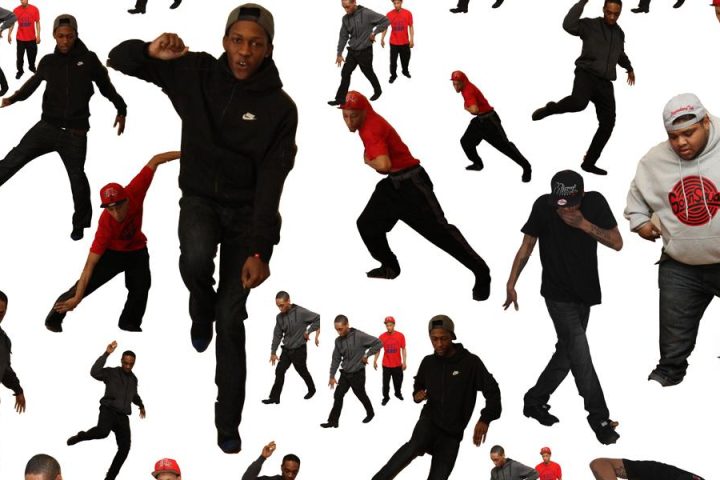
UK drill’s geography always mattered more than its celebrity. The sound came from specific postcodes, specific estates , not from whoever happened to get a Netflix documentary.
What the title is gesturing at is something worth examining structurally: the production signature of UK drill , that slowed, minor-key 808 pattern, the hollow hi-hat spacing , exists independently of any single artist’s visibility. When a sound has that kind of internal coherence, no individual can own it for long. The movement continues even when the spotlight shifts.
There’s something genuinely moving about a genre that refuses to be collapsed into one face, one story. All these young voices from South London and beyond , each one carrying something real , and the world kept trying to funnel it through a single name. This piece feels like it’s restoring something that was always true.
UK drill hits differently in a club context. Bop, Headie, Unknown T , these tracks work at 3am in ways Central Cee just doesn’t. Glad the article is making this point.
What this piece is getting at reminds me of conversations I’ve had about the Québécois music scene , people outside always want to collapse it into Cœur de pirate or Marie-Mai and miss the whole ecosystem underneath. UK drill is the same thing. Producers like Ghosty, the whole network of SoundCloud channels, the freestyle circuits , it’s a community, not a brand. The minute a genre gets a famous face slapped on it for international consumption, you lose the texture of what was actually happening on the ground. People forget that drill was mapping South London the way the Slakah the Beechkid era was quietly mapping Toronto before the city got its own mythology.
Simone, the Québécois parallel is good. Same thing happens with Swedish metal , everyone outside collapses it into In Flames or Opeth and misses about forty bands doing more interesting work. Geography of a scene always gets flattened from outside.
What’s worth noting from a production standpoint is how the UK drill template has stayed remarkably consistent even as the faces change , those 808 patterns, the specific hi-hat swing, the mixing of the vocal into the track almost as another texture. That sonic consistency is actually what allowed the genre to scale without any single artist controlling it. When the production language is codified enough that dozens of producers can work in it fluently, you’ve built something that can survive any individual exit. It’s a structural advantage pop formats almost never have.
What this piece is doing is actually identical to the argument I’ve been making about country for years: collapse a genre into its most famous face, ignore everything underneath. Central Cee is UK drill’s Morgan Wallen , he’s not the genre, he’s the export version of it. The structural point about the 808 pattern existing independently of any one artist is exactly right. Genre momentum doesn’t live in a person, it lives in the sonic blueprint.
You know what hit me reading this? I grew up listening to TLC and Aaliyah and everyone acted like those women WERE R&B, like the genre would just end when they stopped. And then Beyoncé and then SZA and now a whole generation of new voices. The music never needed one face , it needed to keep breathing. UK drill is doing the same thing. There’s something really beautiful about a sound being bigger than any one person who carries it.
What this article gestures at but doesn’t fully say is that the ‘face of a genre’ problem is almost always a race and gender flattening problem too. When drill gets collapsed into its most visible stars, you lose not just the sonic variety but the specific community voices , including queer Black artists in South London and Birmingham who’ve been carving out space in a scene that isn’t always welcoming. The genre is bigger than any one face AND more complex than any single cultural narrative. I’d love to see coverage that maps those edges.
In oral storytelling traditions across West Africa, the griot’s role was never to be the story itself , it was to transmit a community’s memory forward. What drill is doing, particularly UK drill with its postcode specificity and its hyper-local referencing, is structurally similar. Central Cee is legible to international audiences precisely because his polish softens that specificity. But go deeper into the ecosystem and you find artists encoding neighborhood knowledge in ways that require real cultural literacy to fully unpack. That’s not a niche problem , that’s actually where the richest meaning lives.